

If you have ever twisted your knee the wrong way during a game, a hike, or even just a bad step off a curb — you already know how quickly life slows down. An ACL injury is one of the most common and most disruptive knee injuries out there, and choosing the right brace can make a real difference in how fast and how safely you recover.
The problem is, walk into any pharmacy or search online and you will find dozens of options. Sleeves, hinged braces, functional supports — it gets overwhelming fast. This guide is here to cut through the noise and help you understand what actually matters when picking a knee brace for ACL support.
What Does the ACL Actually Do?
The anterior cruciate ligament (ACL) sits inside your knee joint and connects your thigh bone (femur) to your shin bone (tibia). Its main job is to prevent your shin bone from sliding forward and to control rotational movement in the knee.
When the ACL is stretched, partially torn, or completely torn, the knee loses that stability. Simple movements — walking, climbing stairs, pivoting — can feel uncertain or painful. That is where a good knee brace comes in.
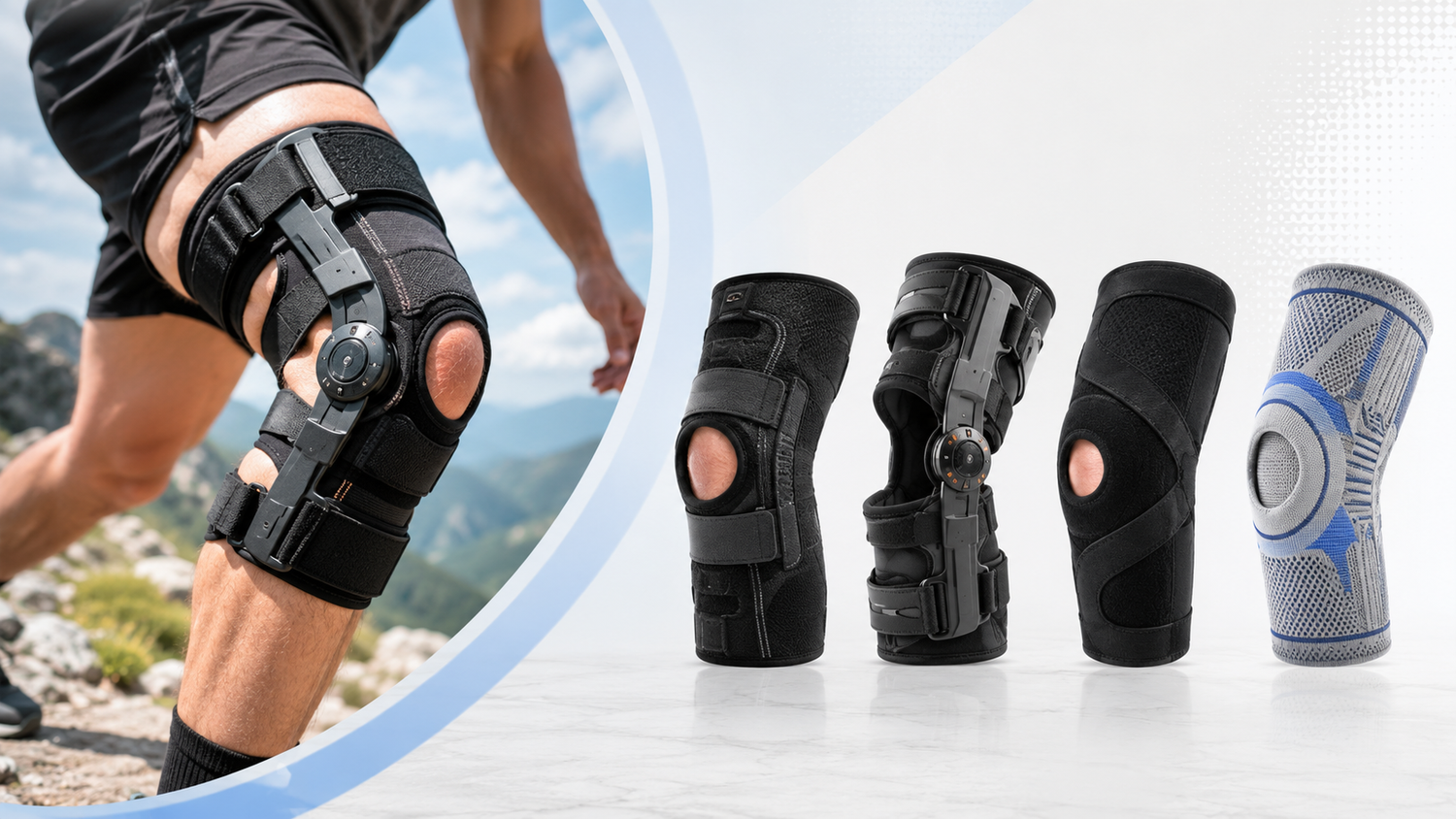
Types of Knee Braces for ACL Injuries
Not all knee braces work the same way. Knowing the difference helps you make a smarter choice.
1. Knee Sleeves
These are the most basic option — a compression sleeve that slides over the knee. They improve circulation, reduce mild swelling, and give you a light sense of support. They are great for people with minor knee soreness or for those returning to light activity after a minor strain.
However, for a genuine ACL injury, a sleeve alone is rarely enough. It does not provide the structural support the ligament needs during recovery.
Best for: Mild discomfort, preventive use, swelling management.
2. Functional ACL Braces
These are purpose-built for people who have had an ACL injury or surgery. They typically feature rigid frames, hinged joints on both sides of the knee, and adjustable straps to hold everything firmly in place.
A good functional brace controls how far the knee can bend, limits unhealthy rotational movement, and gives the recovering ACL the protection it needs to heal without being stressed further.
Best for: Post-surgery recovery, moderate to severe ACL sprains, return-to-sport support.
3. Prophylactic (Preventive) Braces
Athletes in high-contact sports — hockey, football, skiing, rugby — often wear prophylactic braces before any injury happens. These are designed to reduce the risk of ACL damage in the first place by absorbing lateral impact and limiting dangerous joint movement.
Best for: Athletes in high-contact or high-speed sports who want to protect their knees proactively.
4. Rehabilitation Braces (Post-Op Braces)
After ACL reconstruction surgery, your surgeon may recommend a rigid post-op brace that locks the knee at a specific angle and gradually allows more movement as healing progresses. These are typically prescribed and fitted by a healthcare professional.
Best for: Immediately after ACL surgery, under medical guidance.
What to Look for in a Knee Brace for ACL Support
Before you buy, ask yourself these questions:
How serious is the injury? A minor sprain needs less support than a complete ACL tear or post-surgical recovery. Match the brace level to the injury level.
What activity will you use it for? A brace for everyday walking is different from one built for skiing or playing basketball. Make sure the brace is designed for your specific activity.
Does it fit properly? An ill-fitting brace is almost useless. Most quality brands offer detailed sizing guides based on your knee circumference. Measure carefully. A brace that slips during movement provides zero stability when you need it most.
Is it covered by your benefits plan? In Canada, many extended health benefit plans cover orthopedic knee braces when prescribed by a physician. If your doctor recommends a brace for ACL recovery, ask about coverage before purchasing. Keep your receipt and the product details for your insurance claim.
What materials is it made from? Look for breathable, moisture-wicking materials if you plan to wear the brace for extended periods. Skin irritation from sweat buildup is a real issue with cheaper braces.
Key Features That Actually Matter
Hinged joints on both sides — A brace with bilateral hinges offers meaningful medial and lateral stability. Single-side hinges are a compromise. For true ACL support, bilateral is the standard worth aiming for.
Adjustable straps — Your knee changes shape throughout the day, especially if there is swelling involved. Adjustable straps let you dial in the fit rather than being locked into one position.
Low-profile design — If you plan to wear the brace under pants or inside sports gear, a bulky design will not work. Many premium braces today are slim enough to fit under regular clothing.
Quality of the hinge mechanism — The hinge is the most critical part of a functional ACL brace. It should move smoothly, not rattle or slip, and hold its range-of-motion setting reliably through repeated use.
A Note on German Engineering in Orthopedic Braces
Germany has a long-standing reputation for precision in orthopedic products, and that reputation is well-earned. German orthopedic manufacturers typically design their products in close collaboration with physicians, physiotherapists, and sports medicine specialists — which means the braces are built around how the body actually moves, not just what looks good in a product photo.
Brands like Sporlastic, which has over 150 years of orthopedic tradition, reflect this approach — products engineered with clinical input, built to medical standards, and designed to last through real-world use.
When you are choosing a knee brace for ACL recovery, especially if insurance or a physician is involved, German-manufactured braces tend to meet the quality bar that healthcare providers and insurance companies expect.
How Long Do You Need to Wear a Knee Brace After an ACL Injury?
This varies significantly depending on the severity of the injury and whether surgery was involved.
For a minor ACL sprain without surgery, your physiotherapist may recommend bracing for four to eight weeks alongside a rehabilitation exercise program.
For post-surgical ACL reconstruction, many protocols involve wearing a functional brace for six months to a year, with the level of support gradually reduced as strength and stability return.
Always follow the guidance of your surgeon or physiotherapist. A brace supports recovery — it does not replace proper rehabilitation.
Can You Wear a Knee Brace During Sports?
Yes, and many athletes do — both during recovery and as a long-term preventive measure. The key is choosing a brace designed for the specific sport.
For sports that involve lateral cutting movements (soccer, basketball, hockey), a brace with strong rotational control is important. For linear sports (cycling, running), compression and patellar tracking tend to matter more.
One thing worth knowing: some sports organizations have rules about what braces are permitted during competition. If you are a competitive athlete, check with your governing body before selecting a brace.
Questions to Ask Before You Buy
- Has a doctor or physiotherapist assessed my knee?
- Do I need a prescription for insurance reimbursement?
- What is the return or exchange policy if the sizing is off?
- Is this brace designed for my specific activity level?
- Can I get a fitting consultation (in-person or virtual) before ordering?
Taking a few minutes to answer these before purchasing can save you from buying the wrong product twice.
Final Thoughts
An ACL injury is frustrating — but with the right support and the right rehabilitation, most people return to full activity. The knee brace you choose plays a real role in that process. A quality functional brace, properly fitted and appropriate for your stage of recovery, can protect the healing ligament, restore your confidence in the knee, and help you get back to doing what you love sooner.
Take the injury seriously, work with your healthcare provider, choose a brace built to clinical standards, and give yourself the time to heal properly. Your knees carry you through everything — they are worth taking care of.


Leave a comment
This site is protected by hCaptcha and the hCaptcha Privacy Policy and Terms of Service apply.