

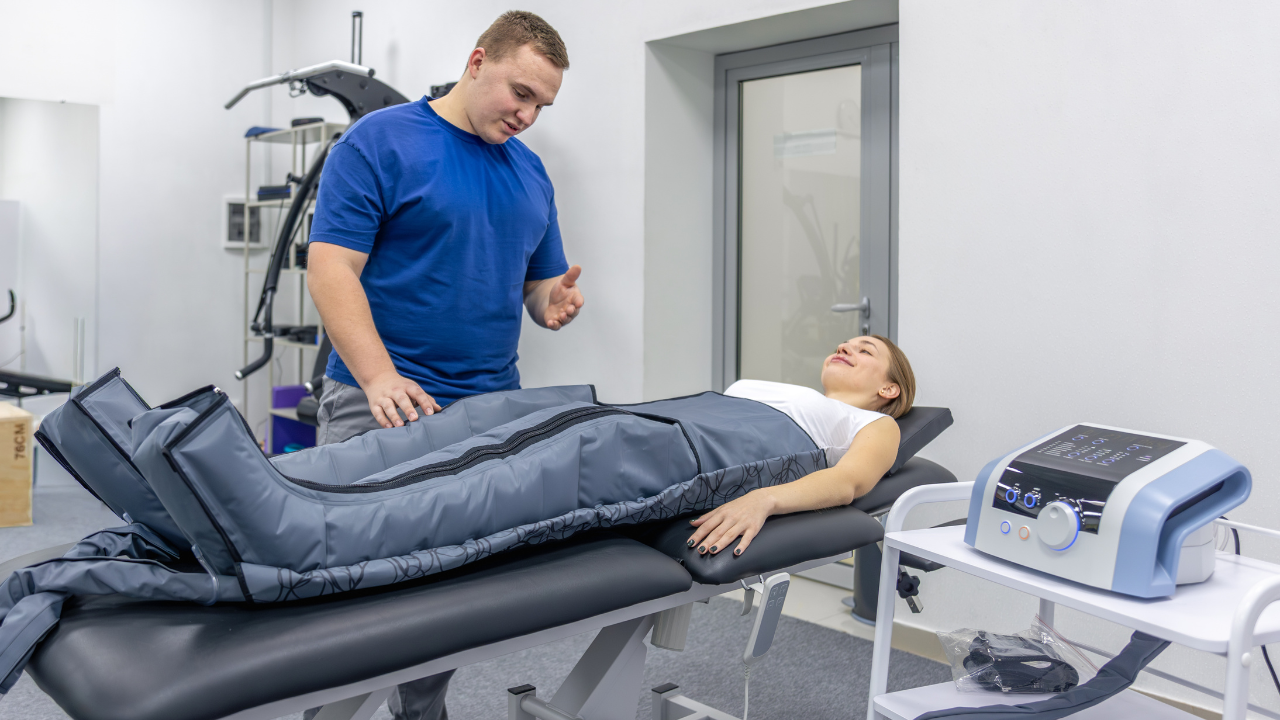
Swelling and pain can quietly take over daily life. A person develops movement and work difficulties because his body experiences two problems which start with minor symptoms: a stiff ankle; heavy legs; lingering discomfort after an injury. The treatment method which most effectively handles these issues yet remains underutilized by people is compression therapy.
Compression therapy has existed since ancient times but modern medicine still recommends it because the treatment supports natural body healing mechanisms. The treatment method provides benefits which we will explore through its working principles and its application to specific situations.
What Is Compression Therapy?
Compression therapy is the process of applying a certain amount of gentle pressure to a particular area of the body using garments such as compression sleeves, socks, wraps, or bandages.
The purpose of this pressure is to:
- Enhance blood flow
- Prevent fluid accumulation
- Support muscles and joints
- Relieve pain and discomfort
It is often applied to the legs, arms, ankles, knees, and sometimes the back or shoulders.
Why Swelling Happens in the Body?
To grasp how compression is done, it is important to understand why swelling happens in the first place.
Swelling typically occurs when:
- There is a buildup of blood or lymph fluid in the tissues
- The circulation of blood is slowed down
- There is an injury that leads to inflammation
- The muscles are overworked or strained
The body develops pressure through muscle and tissue buildup which creates a condition that results in stiffness and pain. The body loses its ability to move freely because untreated swelling progresses to a point which restricts movement and inhibits body functions.
How Compression Therapy Reduces Swelling
1. Improves Blood Circulation
The system applies compression to the target region which enables veins to push blood toward the heart. The system prevents blood from accumulating in specific areas especially which affect the legs and feet.
Better circulation leads to:
- Decreased fluid accumulation
- Quicker oxygen transmission
-
Faster recovery process
This solution benefits individuals who need to maintain their position during extended periods.
2. The Lymphatic System Receives Support
The lymphatic system works to eliminate surplus fluids and waste materials from body tissues. Swelling becomes worse when this system experiences a decrease in activity.
Compression treatment activates lymphatic systems which enable better drainage of excessive bodily fluids. Swelling decreases as fluid volume in the body decreases.
3. The Process Manages Inflammation
The body uses inflammation as a natural reaction to injuries yet excessive inflammation results in discomfort and restricted movement.
Compression therapy has these effects:
- It restricts complete body movement
- It acts to decrease the pressure on body structures
- It helps to reduce swelling in affected parts
This product shows particular effectiveness for use during recovery from surgical operations and after sustaining physical injuries.
The Role of Compression Therapy in Pain Relief
1. Nerve Pressure Relief Through Compression
The body experiences nerve pain and tingling when swelling exerts pressure on adjacent nerves. Compression therapy reduces swelling which results in decreased nerve pressure that naturally alleviates discomfort.
2. The System Offers Support For Muscles And Joints
Compression garments function as a second layer of skin. The garments help to maintain muscle and joint stability which prevents movements that could cause discomfort.
The system provides support to handle:
- Muscle strains
- Joint instability
- Chronic pain conditions
3. Body Awareness Improvement
Compression helps people become more aware of their body movements and their position in space. The improved body awareness leads to better muscle performance which reduces physical strain during athletic activities.
Main Conditions Treated With Compression Therapy
Medical professionals use compression therapy as a standard treatment for:
- Sports injuries
- Post-surgical recovery
- Varicose veins
- Lymphedema
- Arthritis-related swelling
- Chronic leg fatigue
- Ankle and knee swelling
-
Repetitive strain injuries
The system serves both as a therapeutic method and as a means to stop medical conditions from developing.
Compression Therapy in Daily Life
People use compression for their daily wellness activities after they have completed their medical treatment. Medical professionals use compression therapy to help their patients recover from injuries and medical conditions to their pre-injury state.
Examples include:
- Employees wear compression socks during their entire workday.
- Athletes wear compression sleeves to protect their body during sports activities.
- Travelers apply compression supports to maintain their physical condition.
- Athletes use light compression after their workouts to help their muscles recover.
The method successfully diminishes fatigue symptoms while delivering a sensation of lightness and comfort to the body.
Selecting the Appropriate Compression Level
Different types of compression therapy exist for different medical purposes. The results will be less effective when the wrong method gets applied.
Essential details to evaluate include:
- Light compression: For daily comfort and mild swelling
- Moderate compression: For regular swelling, sports use, or recovery
- Firm compression: For medical conditions (should be used with guidance)
The proper fit of a garment needs to match its designated compression level. A garment that’s too tight can restrict blood flow, while one that’s too loose won’t help at all.
When to Be Careful with Compression Therapy
Compression therapy needs careful implementation because it remains safe when used under the following circumstances.
- You have circulation disorders
- You experience numbness or discoloration
- The discomfort becomes worse after you wear compression
- You have been advised otherwise by a doctor
Medical professionals recommend seeking medical advice whenever symptoms continue or become more severe.
The Role of Consistency
The effectiveness of compression therapy depends on its continuous application. People who use the product occasionally will experience short-term relief, but those who use it regularly will achieve enduring comfort and enhanced blood flow and better movement abilities.
Think of it as supporting your body daily, not just reacting to pain.
Conclusion
Compression therapy provides an effective method for managing swelling and pain through its support of the body's natural healing process. The therapy enables faster recovery through its ability to enhance blood circulation, decrease fluid retention, and create stability in muscles and joints, which leads to improved daily functions. People who experience injuries or persistent pain or constant tiredness can find relief through appropriate compression support.
The selection of superior compression products that exhibit excellent design features matters for achieving both comfortable use and productive results. Sporlastic, an orthopedic brand which people trust, combines medical knowledge with user-centric design to create solutions that enable people to manage their pain and swelling while maintaining their active lifestyle.



Leave a comment
This site is protected by hCaptcha and the hCaptcha Privacy Policy and Terms of Service apply.