

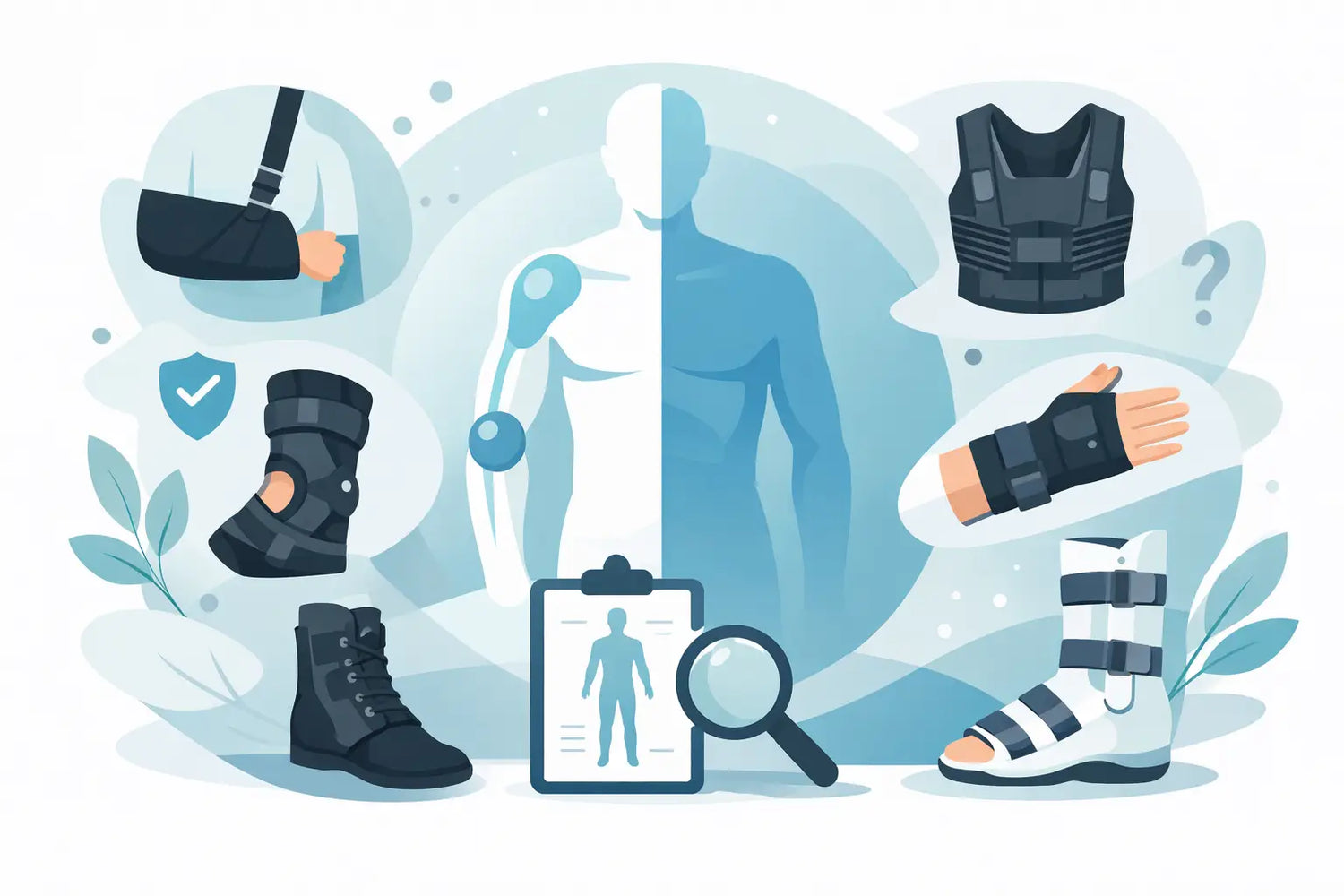
A brace should do more than feel tight around a sore joint. The right orthopedic braces and supports can help guide movement, provide targeted compression, reduce unwanted motion and give you more confidence during work, rehabilitation or daily activity. The wrong one can be uncomfortable, slide out of position or provide more restriction than your condition requires.
Choosing a support starts with understanding the body area involved, the nature of the problem and the level of stabilization your clinician has recommended. A soft compression sleeve, a structured ligament brace and a post-operative immobilizer may all be called a “brace,” but they are designed for very different treatment goals.
Start with the treatment goal, not only the painful area
Pain is useful information, but it does not always identify the structure that needs support. Knee pain, for example, may relate to patellar tracking, meniscal irritation, ligament laxity, osteoarthritis, muscle weakness or a recent injury. Each concern may call for a different support design.
Before selecting a brace, consider whether the main goal is to manage swelling, support an unstable joint, limit a specific movement, protect healing tissue or make activity more comfortable. If you have received a diagnosis or a recommendation from a physician, physiotherapist, chiropractor, occupational therapist or orthopedic specialist, use that guidance as the starting point.
A brace is usually part of a broader treatment plan. It may be used alongside exercise therapy, activity modification, medication, manual treatment or post-treatment rehabilitation. It is not a replacement for an assessment when pain is severe, persistent, follows a significant injury or is accompanied by numbness, marked swelling, deformity or loss of function.
How orthopedic braces and supports differ
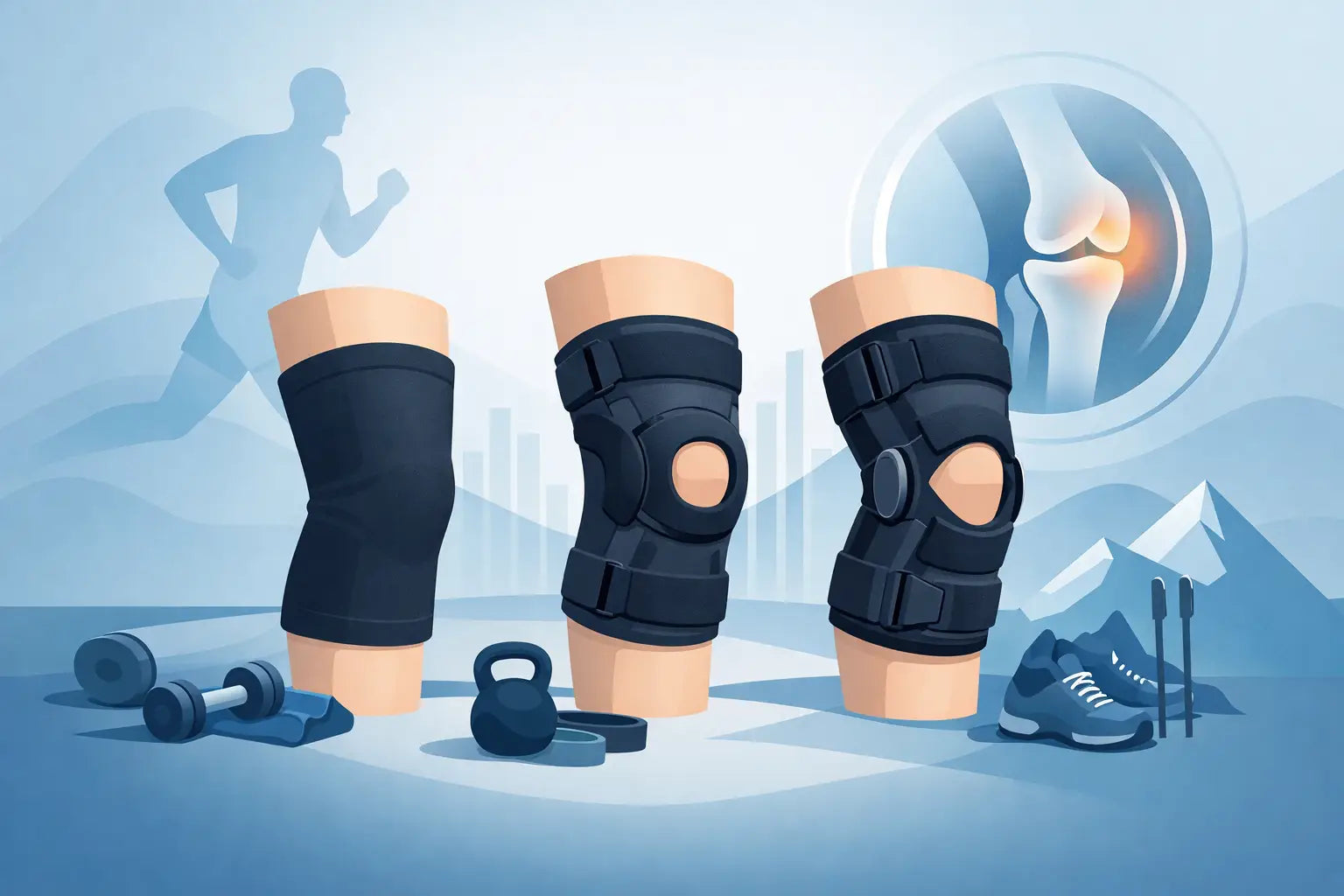
The level of support is determined by the materials, compression, strap system and stabilizing elements built into the product. More support is not automatically better. A highly restrictive brace can be appropriate after a significant ligament injury or procedure, while a flexible knit support may be more suitable for everyday joint discomfort or return to activity.
Compression supports for everyday management
Compression supports are often made from elastic knit materials that apply gentle to firm, graduated pressure around the joint or limb. They may help with proprioception, which is your awareness of where a joint is positioned during movement. For many people, that added sensory feedback makes a joint feel more secure during walking, standing or exercise.
Compression may also be useful when mild swelling, fatigue or discomfort is part of the picture. The fit matters greatly: a support that bunches behind the knee, rolls at the edge or leaves deep marks may be the wrong size or style. People with circulatory concerns, reduced sensation, diabetes-related complications or significant swelling should ask a qualified clinician before using compression products.
Stabilizing braces for instability and protection
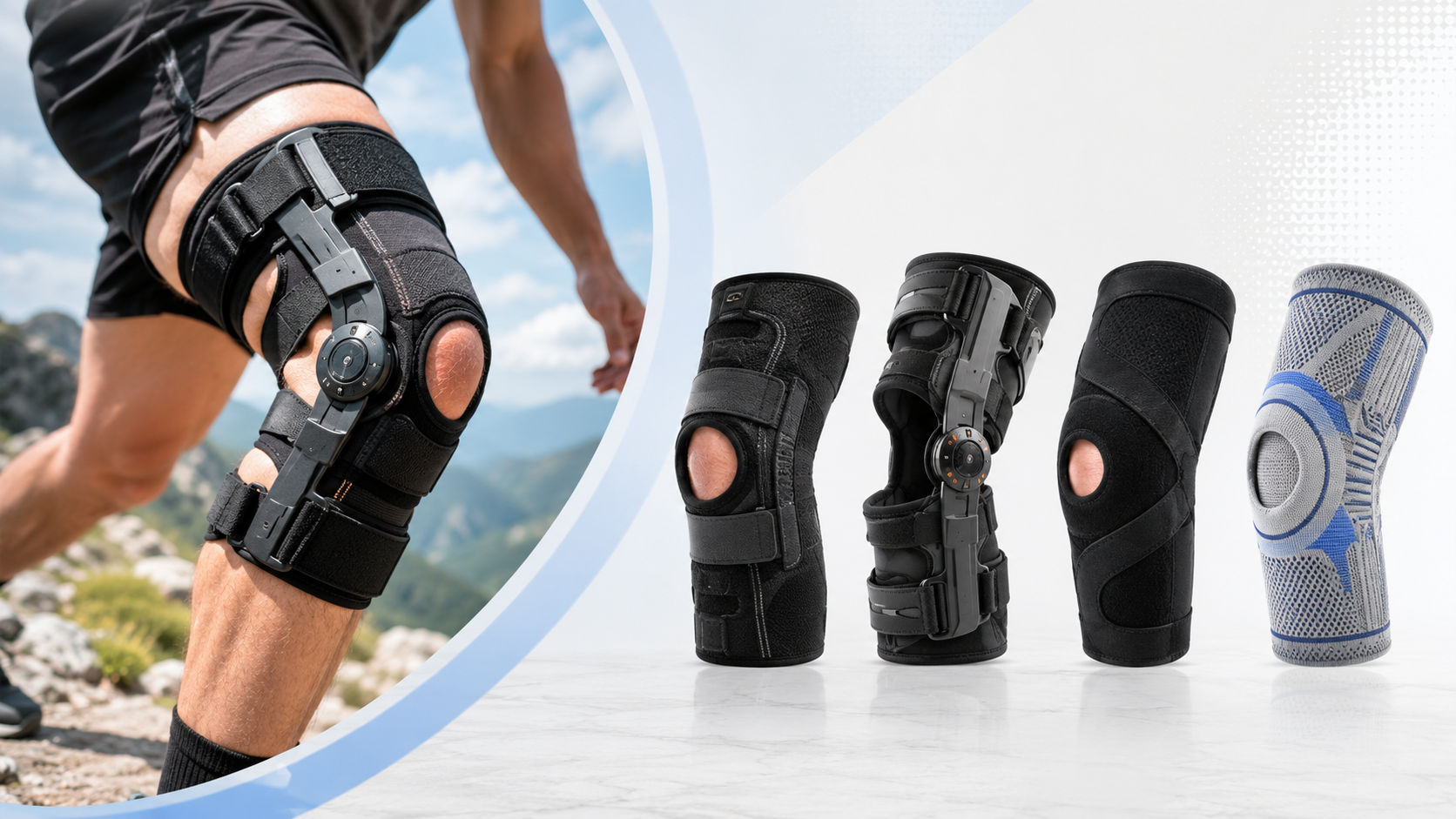
When a joint needs more than compression, a stabilizing brace may use straps, stays, hinges, pads or anatomically shaped reinforcement. These components are designed to influence movement rather than simply cover the area.
A hinged knee brace, for instance, can offer more structured support for certain ligament-related concerns. An ankle brace with figure-eight straps may help control unwanted rolling motions. A wrist brace can hold the wrist in a more neutral position when repetitive tasks or healing tissues need protection.
The trade-off is that structured support can feel bulkier and may limit some movement. This can be beneficial when protection is the priority, but it may not suit every job, sport or stage of recovery. Your treatment provider can help determine when to use a stabilizing brace and when it is appropriate to reduce reliance on it.
Immobilizing and post-treatment supports
Some products are intended to significantly restrict movement for a defined period. These may be prescribed following surgery, fracture management, acute injury or a specific treatment protocol. Their fit and use instructions should be followed closely, including guidance on wear time, skin checks and permitted activities.
Do not substitute a general retail support for a prescribed immobilizer. Similarly, do not change the settings of an adjustable brace without direction from the practitioner managing your care.
Match the support to the body region
The construction of a brace should reflect the anatomy and movements of the area it supports. A well-designed product has features placed where they can do useful work without creating unnecessary pressure.
For the ankle and foot, consider whether the concern is recurring sprains, tendon irritation, plantar discomfort, swelling or a need for greater stability in footwear. Low-profile designs may fit better inside a shoe, while more substantial braces may be preferable during recovery from instability.
For knee and thigh concerns, look at whether the brace is intended for patellar guidance, ligament stabilization, meniscal support, muscle strain or joint discomfort associated with degenerative changes. The location of pads, side stays and straps should align with the treatment objective, not simply the area that hurts.
Back and hip supports vary widely. Some provide compression and warmth around the lumbar region, while others use reinforcing elements or strap systems to create a more controlled fit. Shoulder, elbow, hand, wrist, thumb and finger products likewise range from flexible supports to designs that limit motion in a targeted way.
For children and people with neurological conditions, fit, skin tolerance and functional goals require especially careful consideration. A practitioner’s recommendation is valuable when growth, altered muscle tone, gait changes or reduced sensation are involved.
Fit is a clinical feature, not a finishing detail
Even a technically advanced brace cannot perform as intended if it is incorrectly sized. Follow the product’s measuring instructions exactly, using the specified circumference or length measurements rather than relying on clothing size. Measurements are often best taken directly against the skin, with the body position described in the sizing guide.
A correctly fitted support should feel secure without causing pinching, tingling, coldness, discolouration or increasing pain. It should remain in position through the movements you need to perform. If a brace consistently slips, twists or migrates, check the size, placement and strap tension before assuming the product is unsuitable.
Wear the brace for a short period at home before relying on it for a full workday, training session or long outing, if your care instructions allow. This gives you time to assess comfort, footwear compatibility and any skin sensitivity. Inspect the skin after removal, particularly if you have fragile skin or reduced sensation.
Practical questions to ask before purchasing
A useful product decision comes from a few focused questions. What diagnosis or symptom pattern is being addressed? Is the goal compression, stabilization, movement control or post-treatment protection? Will the brace be worn under clothing, inside footwear or during a particular sport or job? How many hours a day will it be used?
Material and construction also matter. Breathable knit fabrics may be more comfortable for extended wear, while adjustable closures can help accommodate changes in swelling. Silicone bands, anatomical shaping and integrated stays can improve positioning, but only if they suit your body shape and intended activity.
For Canadian customers seeking insurance reimbursement, a physician prescription and itemized documentation are commonly requested by extended health plans. Coverage rules differ by insurer and plan, so confirm the requirements before ordering. Keeping the prescription, invoice and any product documentation together can make a claim easier to submit.
Sporlastic Canada offers professionally designed supports across major musculoskeletal categories, with product information that helps customers compare intended indications, stabilization features and sizing requirements. When a condition is complex or a product has been specifically prescribed, confirm your selection with the treating practitioner before purchase.
Use your brace as part of a plan
A brace can make movement feel more manageable, but it should support your recovery goals rather than quietly replace them. If your clinician has prescribed strengthening, mobility work, gait retraining or a staged return to sport, the support should fit within that plan.
Pay attention to changes. A brace that was comfortable in the first week may need adjustment as swelling reduces or activity increases. New pain, skin irritation, worsening numbness or a feeling that the joint is becoming less stable deserves follow-up rather than simply tightening the straps.
The best support is the one that matches the condition, fits accurately and helps you move with appropriate confidence. Give yourself permission to ask for clinical guidance, measure carefully and choose purpose-built support over a one-size-fits-all solution.

Leave a comment
This site is protected by hCaptcha and the hCaptcha Privacy Policy and Terms of Service apply.