

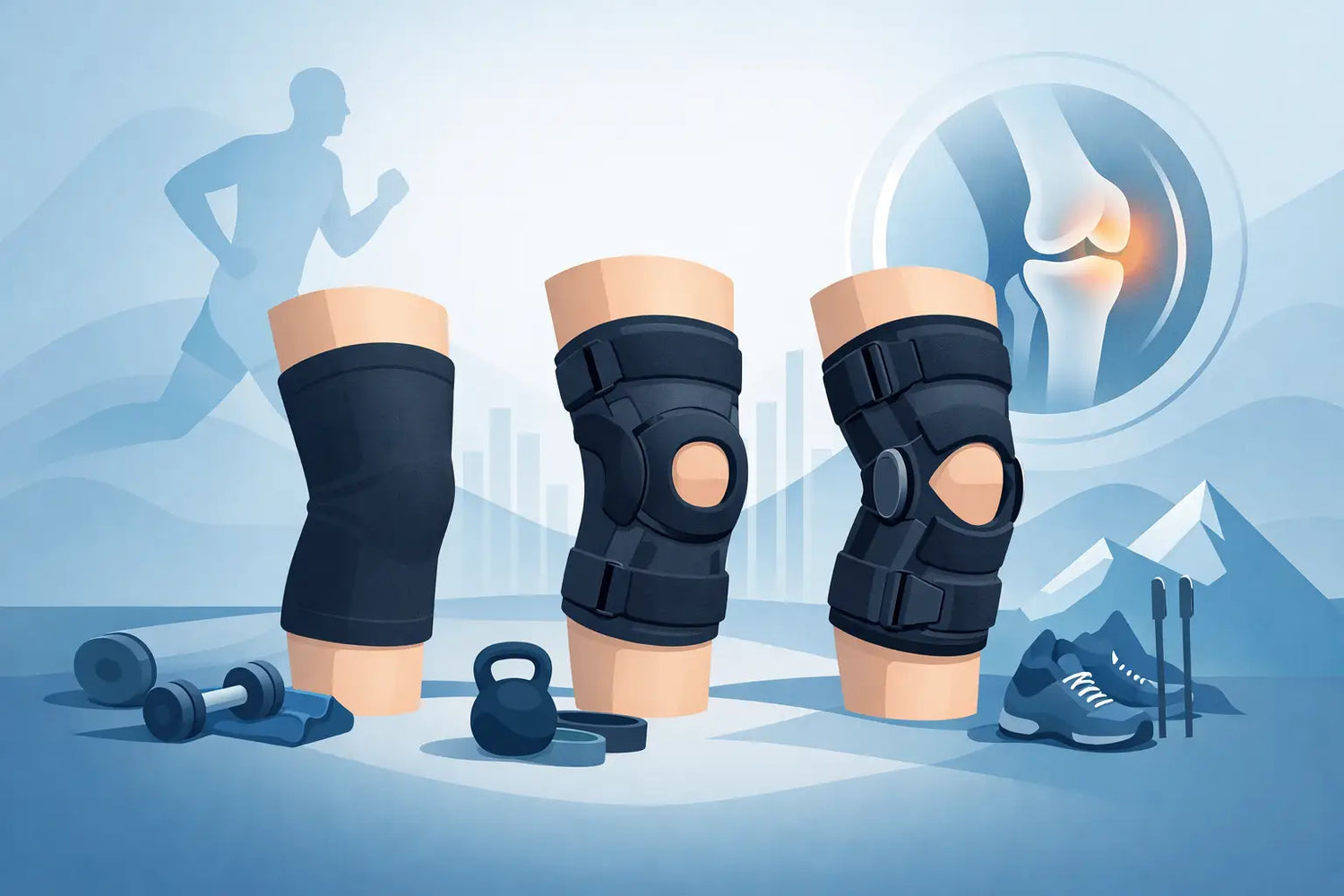
A knee that shifts on stairs, aches after a work shift, or feels unreliable when returning to sport needs more than vague reassurance. Knee braces can provide purposeful compression, guidance and stabilization when matched to the underlying concern, the stage of recovery and the activities you need to do. The right support should help you move with greater confidence without creating pressure, slipping out of place or limiting motion beyond what your treatment plan requires.
What knee braces are designed to do
A knee brace is not a one-size-fits-all solution for knee pain. Different designs address different mechanical needs. A soft compression support may help manage swelling and improve body awareness around a mildly irritated joint. A brace with side stays can offer more structured support when the knee feels unstable. A hinged design may be indicated when ligament injury, post-operative rehabilitation or significant instability calls for controlled movement.
The practical goal is to support function. That may mean making it more comfortable to walk through the grocery store, returning gradually to cycling, managing a physically demanding job, or following the exercises prescribed by a physiotherapist. A brace should complement rehabilitation, activity modification and clinical care where needed. It does not repair a torn ligament, reverse arthritis or replace a professional assessment when pain, swelling or instability is persistent.
Choose knee braces by the problem, not the appearance
Many braces look similar at first glance, especially when viewed online. The useful differences are in their compression level, support architecture, closure system and the way they interact with the kneecap and surrounding tissues.
Mild discomfort, swelling or overuse symptoms
A knitted knee support with graduated or medical-grade compression is often considered for minor sprains, overuse-related discomfort, early degenerative changes and mild swelling. Compression can provide a secure, supportive feeling and may assist with managing soft-tissue swelling. Some designs include a silicone pad around the patella, or kneecap, to help guide it during movement and reduce localized pressure.
This category is commonly appropriate when the knee is stable but uncomfortable. It can be a sensible option for active adults who need a low-profile support under workwear or for older adults seeking comfortable assistance with day-to-day mobility. More compression is not automatically better. A support that feels restrictive, causes numbness or leaves deep pressure marks is unlikely to be the correct fit or compression level.
Kneecap tracking concerns
Pain at the front of the knee can be associated with patellofemoral irritation, changes in patellar tracking or strain around the tendon. Braces designed for this concern typically use a shaped patella opening, a guiding ring or targeted strap system. Their purpose is to support the kneecap's path during bending and straightening rather than simply compressing the entire joint.
The right choice depends on the diagnosis and symptoms. A patella-focused brace may be useful during a gradual return to stairs, squats or sport, but it should not be selected solely because pain is felt near the kneecap. A clinician can help determine whether the source is the patellofemoral joint, patellar tendon, meniscus, hip mechanics or another issue.
Ligament laxity and feelings of instability
If the knee gives way, shifts during pivots or feels unreliable after a ligament injury, a more stabilizing brace may be appropriate. Functional braces often incorporate medial and lateral stays, straps or hinges to help control unwanted side-to-side movement. They are commonly considered for collateral ligament concerns, cruciate ligament rehabilitation and chronic instability, subject to the recommendations of the treating practitioner.
There is a trade-off. Greater stabilization usually means a more substantial brace, more adjustment points and a more deliberate fitting process. For someone returning to field sport or working on uneven ground, that additional structure may be worthwhile. For a short walk around the neighbourhood, it may be more support than necessary.
Meniscal injury, osteoarthritis and loading concerns
Meniscal damage and osteoarthritis can produce pain with twisting, prolonged standing, deep bending or weight-bearing. A compressive support may help some people with mild symptoms, while others may require a more structured brace. In specific cases, an unloading design can redistribute pressure away from a painful compartment of the knee.
These situations benefit from professional guidance because the correct support depends on imaging, alignment, the affected compartment, symptom severity and daily demands. A brace can be part of a well-managed plan, particularly when paired with strengthening and mobility work, but it should not delay assessment of a locked knee, sudden swelling or new inability to bear weight.
Fit is a clinical feature, not a finishing detail
Even a well-designed brace cannot work as intended if it is the wrong size. Knee braces should feel secure throughout walking, sitting and bending, without rolling, bunching behind the knee or migrating downward. Measure exactly where the product's sizing guide instructs, often around the knee joint and at defined points above or below it. Do not assume your usual clothing size will translate to brace sizing.
Try the brace during the movements that matter to you. Walk for several minutes, sit in a chair, climb a step if safe, and gently bend the knee. A patella opening should sit centrally over the kneecap. Hinges or side stays should align with the joint rather than sitting too high or too low. Adjustable straps should be firm enough to control movement without constricting circulation.
Skin changes matter. Remove the brace and check for persistent redness, rubbing or irritation, especially if you have sensitive skin, diabetes, reduced sensation or circulation concerns. Speak with a health professional before using compression or a stabilizing brace if you have vascular disease, significant neuropathy, unexplained leg swelling or an active skin condition.
How long should you wear a knee brace?
The answer depends on why you are wearing it. A person using a compression support for a short period of activity may wear it only during work, exercise or longer walks. Someone following a post-injury or post-operative protocol may receive specific instructions on daily wear, range-of-motion limits and when to transition to a different brace.
Avoid treating a brace as permission to push through sharp pain, repeated giving way or worsening swelling. Those signs suggest the activity level, brace choice or treatment plan needs review. Equally, wearing a brace continuously when it has not been recommended can encourage overreliance and may interfere with the gradual rebuilding of strength and confidence.
For many people, the best approach is strategic use: wear the brace for the task that challenges the knee, continue prescribed exercises, and reassess as symptoms and function improve. Your physician, physiotherapist, chiropractor, occupational therapist or orthopedic specialist can provide direction based on your diagnosis.
Materials and construction affect everyday comfort
Premium knee supports are designed around details that become noticeable after several hours of wear. Breathable knit zones can help manage heat. Soft edge finishing may reduce pressure at the top and bottom of the support. Anatomically shaped fabrics and silicone grip zones can help prevent slipping. Hinges, stays and strap systems should offer controlled support while keeping bulk manageable under clothing.
German-engineered orthopedic products, including those from Sporlastic Canada, are developed with this relationship between anatomy, movement and material performance in mind. The best construction is still the one that suits your needs. A sleek knitted support may be ideal for daily comfort, while a more technical hinged brace may be the better choice when stability is the priority.
Care, documentation and when to seek help
Follow the product care instructions closely. Most textile supports benefit from regular gentle washing to remove perspiration and maintain elastic performance. Close hook-and-loop fasteners before washing, avoid high heat, and allow the brace to air dry. A worn-out or stretched brace may no longer deliver consistent compression or stabilization.
If you are purchasing a brace with insurance reimbursement in mind, keep your receipt and product documentation. Many Canadian extended health plans require a physician prescription and may have specific eligibility rules for orthopedic braces. Confirm your plan requirements before ordering, particularly when a higher-support or specialized brace has been recommended.
Seek timely clinical assessment after a significant injury, a pop followed by swelling, joint locking, repeated buckling, calf pain or swelling, fever, or pain that is getting worse rather than better. The most helpful brace is one selected for a clear reason, fitted carefully and used as part of a plan that helps you return to the movements that matter.

Leave a comment
This site is protected by hCaptcha and the hCaptcha Privacy Policy and Terms of Service apply.