

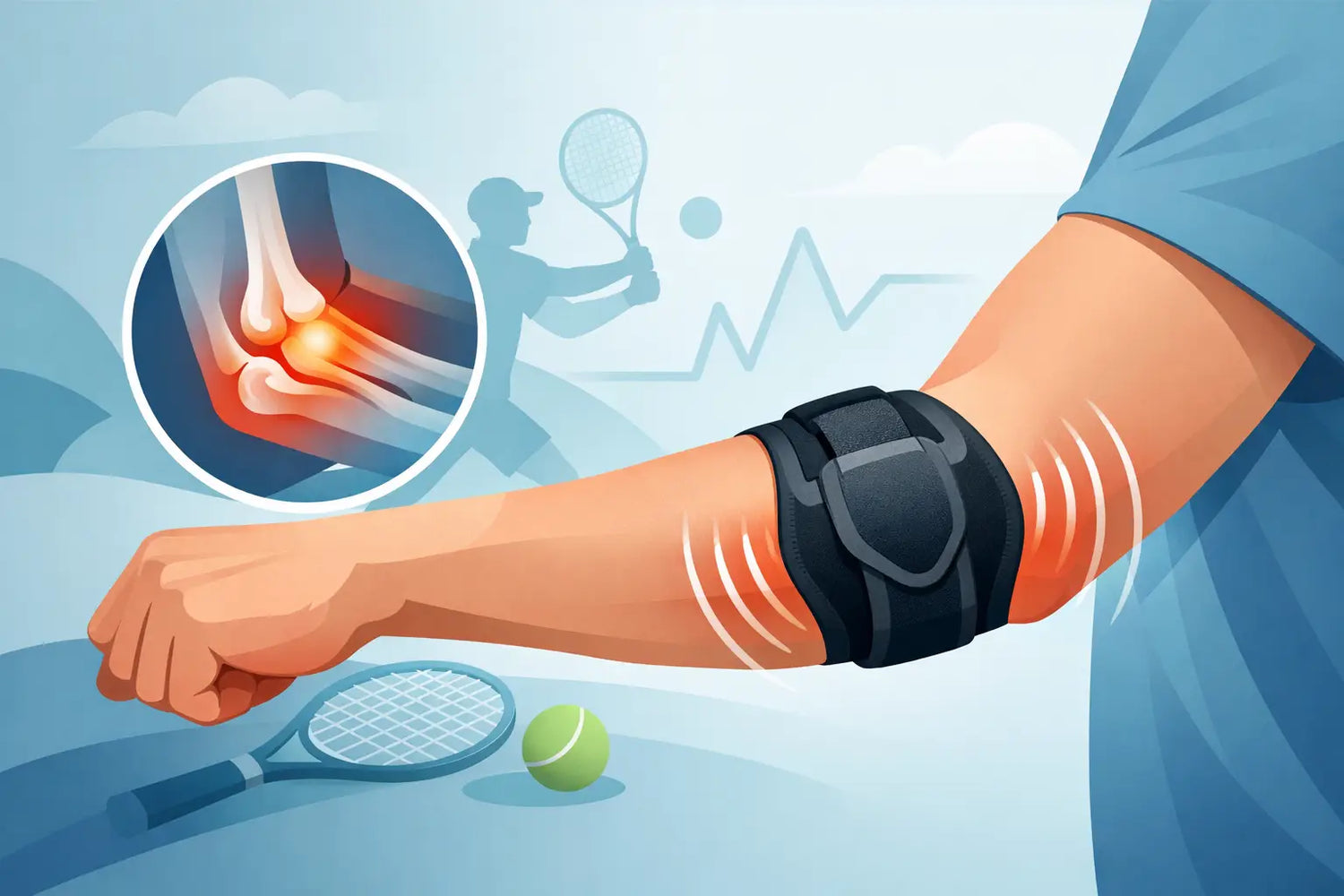
The pain often starts with an ordinary task: lifting a kettle, gripping a drill, turning a door handle, or carrying a laptop bag. When the outer elbow becomes tender, a tennis elbow compression brace can be a purposeful way to reduce stress on irritated tissues while you continue with appropriate daily activity and rehabilitation. It is not a cure on its own, but the right support can make loading the arm more manageable during recovery.
What a Tennis Elbow Compression Brace Is Designed to Do
Tennis elbow, clinically known as lateral epicondylalgia or lateral epicondylitis, involves pain around the bony prominence on the outside of the elbow. It is commonly associated with repeated gripping, wrist extension, lifting, or twisting. Despite its name, it affects far more than tennis players. Tradespeople, office workers, gardeners, racquet-sport athletes, musicians, and people with physically demanding caregiving roles can all develop it.
The involved tendons attach the forearm extensor muscles to the outside of the elbow. When those tissues are overloaded or sensitive, forceful hand and wrist activity can trigger pain at the elbow. A compression brace is intended to change how that force is distributed. Depending on its construction, it may apply targeted pressure to the forearm muscles, provide graduated compression around the elbow region, or combine compression with an integrated pad.
This support can offer several practical benefits. It may improve awareness of the arm during repetitive tasks, provide a sense of security, and reduce discomfort associated with certain movements. Some people find they can better tolerate work duties or a gradual return to sport when a brace is used alongside activity modification and prescribed exercise.
A brace does not repair a tendon simply by being worn. If aggravating loads remain too high, symptoms can persist despite excellent support. Think of compression as one component of a treatment plan that may also include a period of reduced provocation, physiotherapy-led strengthening, ergonomic changes, and clinical assessment where needed.
Choosing a Tennis Elbow Compression Brace
The most suitable design depends on where you feel pain, the activities that bring it on, and the degree of support you need. A diagnosis matters, too. Pain on the outside of the elbow is often tennis elbow, but nerve irritation, joint conditions, referred neck pain, or another forearm injury can produce similar symptoms.
Forearm Straps for Targeted Pressure
A counterforce strap sits a few centimetres below the elbow joint, over the upper forearm muscles. Its purpose is to apply focused pressure that may reduce tendon loading during gripping and wrist-intensive tasks. This style can be useful for short periods of activity, such as a work shift, racquet sport, DIY project, or gardening session.
Fit is particularly important with a strap. If it is too loose, it may slide or provide little benefit. If overtightened, it can feel restrictive or cause tingling, colour changes, or increased discomfort in the hand. A strap should feel secure, not constricting.
Compression Sleeves for Broader Support
An elbow compression sleeve provides support over a larger area of the elbow and forearm. This can suit people who prefer a more integrated feel, experience diffuse muscular aching, or want a low-profile option beneath workwear. Medical-grade knit fabrics are often selected for their ability to provide consistent compression while allowing the elbow to bend naturally.
Some sleeves incorporate functional pads or silicone elements around the painful region. These features can provide targeted pressure while the knit delivers broader compression. For daily wear, look for a design that stays in position, has a comfortable edge finish, and does not bunch in the elbow crease.
Compression Is Not the Same as Immobilization
Most tennis elbow supports are designed to allow movement rather than lock the elbow in place. That is usually appropriate because the goal is to manage load, not eliminate all arm use. More restrictive bracing may be considered after certain injuries or procedures, but it should be selected under the direction of a physician or treating practitioner.
For people who need support during rehabilitation, a clinician can help determine whether a targeted strap, compression sleeve, or a different elbow orthosis is appropriate. This is particularly valuable when symptoms affect work capacity, sport participation, or sleep.
Getting the Fit Right
A technically advanced brace cannot perform as intended if the size or placement is incorrect. Follow the product-specific measuring instructions rather than selecting a size based only on shirt size or past experience with another brand. Elbow supports may use measurements around the forearm, elbow, or upper arm, and sizing systems vary.
Put the brace on with the arm relaxed and check that it lies flat against the skin. With a forearm strap, place it below the elbow joint rather than directly over the bony point of pain. With a sleeve, ensure the elbow is aligned with the designated joint area or pad placement. Bend and straighten the arm, make a light fist, and perform a few normal movements. The brace should remain stable without pinching, rolling, or causing numbness.
Compression should feel supportive, not aggressive. Remove the brace and seek advice if you notice persistent tingling, coldness, swelling below the support, significant skin irritation, or pain that is clearly worsening. People with reduced sensation, circulation concerns, fragile skin, or complex medical conditions should discuss compression products with a healthcare professional before use.
Wearing a Brace During Work, Sport, and Recovery
The timing of brace use matters. Wearing a tennis elbow support during the activities that reliably provoke symptoms can be more useful than wearing it continuously without a clear purpose. For example, someone who develops pain while using hand tools may wear a properly fitted support for that task, then remove it afterward according to product guidance and practitioner advice.
For sport, introduce the brace during lower-intensity practice before relying on it for a full match or competition. If your backhand, serve, or gripping pattern continues to produce sharp pain, the solution may involve technique, equipment, training volume, or strength capacity rather than a tighter brace. A support should not be used to push through escalating pain.
Recovery also benefits from measured progression. Complete rest can sometimes make the forearm feel weaker and less tolerant when activity resumes. A physiotherapist may prescribe gradual loading exercises for the wrist extensors, shoulder, and upper limb. In this setting, compression can support comfort while the underlying capacity of the arm is rebuilt.
At a desk, examine the repeated actions that keep the elbow irritated. A mouse that requires a sustained grip, an unsupported forearm, frequent trackpad use, or long periods of typing with the wrist extended can all contribute. Small changes in workstation setup and regular movement breaks may reduce the amount of support you need over time.
When Elbow Pain Needs Further Assessment
A compression brace is appropriate for many mild to moderate overuse presentations, but it should not delay assessment of a more significant problem. Arrange an evaluation with a physician, physiotherapist, chiropractor, occupational therapist, or other qualified practitioner if pain followed a fall or sudden injury, the elbow is visibly swollen or deformed, or you cannot use the arm normally.
Assessment is also advisable if there is persistent numbness, hand weakness, neck pain with radiating symptoms, night pain, fever, redness, or pain that does not improve with sensible load management. If symptoms have been present for several weeks and are limiting work or daily function, a clinician can help clarify the diagnosis and build a more targeted treatment plan.
For workplace injuries or insurance claims, keep the documentation supplied with your support purchase and ask your practitioner whether a prescription is required for reimbursement. Requirements vary by insurer and benefit plan, so clear product and medical documentation can make the process easier.
Selecting Quality Support for Daily Use
An elbow brace is often worn during the exact activities that challenge the arm, so material quality and construction are not minor details. Look for breathable fabrics, dependable closures where applicable, durable compression that holds its shape, and design features that avoid pressure at sensitive areas. A washable support with clear care instructions is also practical when it is used regularly for work or exercise.
Sporlastic Canada approaches orthopedic supports as treatment tools, with clinically informed design features intended to balance compression, stabilization, and everyday comfort. The best choice remains individual: a discreet sleeve may suit long office days, while a targeted strap may better suit intermittent gripping tasks. If you are between sizes or unsure about the level of support, use the stated measurements and consult a healthcare practitioner when possible.
A well-fitted brace should make your next appropriate movement feel more manageable, not encourage you to ignore what your elbow is telling you. Use that support to create room for smarter pacing, progressive rehabilitation, and a return to the activities that matter to you.



Leave a comment
This site is protected by hCaptcha and the hCaptcha Privacy Policy and Terms of Service apply.