

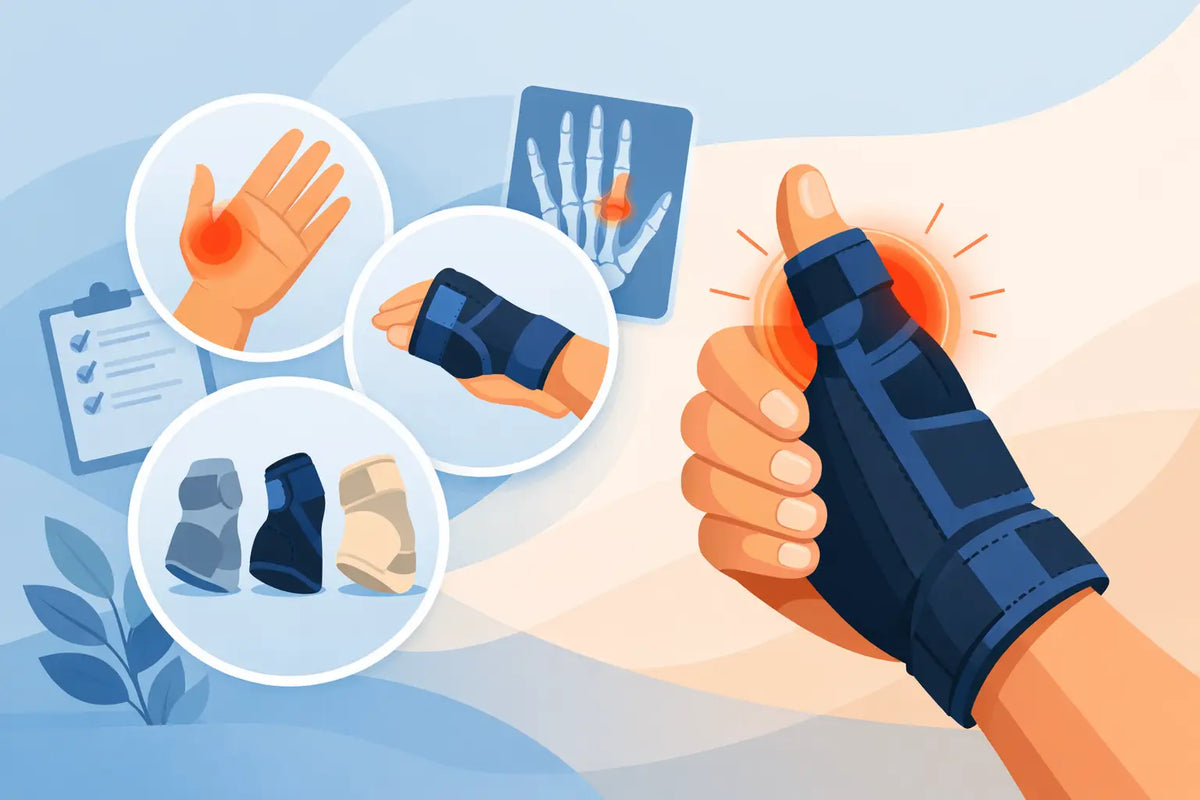
Opening a jar, turning a key, lifting a kettle, or scrolling on a phone can become unexpectedly difficult when thumb arthritis is involved. A thumb brace for arthritis is designed to reduce stress on painful joints while preserving as much useful hand movement as possible. The right support should feel purposeful: stable enough to protect the thumb during daily tasks, yet comfortable enough that you will actually wear it.
Thumb arthritis does not affect every person in the same way. Pain may be centred at the base of the thumb, felt when pinching or gripping, or accompanied by weakness, stiffness, swelling, or a sense that the joint is less secure. Choosing a brace starts with understanding which movements aggravate symptoms and how much stabilization is appropriate for your activities.
Why thumb arthritis makes everyday tasks painful
The thumb carpometacarpal joint, often called the CMC joint, sits at the base of the thumb where it meets the wrist. It allows the thumb to move across the palm for pinching, grasping, and handling objects. This range of motion is useful, but it also places substantial load on the joint.
With osteoarthritis, the smooth cartilage that helps the joint move can gradually wear down. The result may be pain with forceful gripping, reduced pinch strength, joint stiffness, and irritation after repetitive work. Some people also experience symptoms at the metacarpophalangeal joint, or MCP joint, which is the thumb knuckle.
A brace cannot reverse arthritic changes. Its role is to limit the movements and positions that place excess strain on an irritated joint. By holding the thumb in a more supported position, it can make routine activity more manageable and give the surrounding tissues an opportunity to settle.
What a thumb brace for arthritis should support
An effective thumb support typically stabilizes the base of the thumb while leaving the fingers available for daily use. The balance matters. A very flexible sleeve may provide warmth and light compression but may not control painful thumb motion. A highly rigid brace may offer stronger protection but can make typing, driving, meal preparation, or personal care more difficult.
For many people with CMC arthritis, the most useful design supports the thumb in a functional resting position. This helps reduce painful thumb collapse toward the palm during pinching and gripping. Depending on the brace, stabilization may come from moulded thermoplastic stays, flexible support elements, adjustable straps, or a combination of these features.
The wrist should not always be immobilized. If pain is isolated to the thumb base and wrist movement is comfortable, a shorter brace that leaves the wrist free may be better suited to frequent daytime tasks. If symptoms involve both the thumb and wrist, or if a clinician has recommended more control, a longer thumb spica design may be appropriate.
CMC support versus MCP support
The location of symptoms helps guide brace selection. A CMC-focused brace is intended to control the base of the thumb and is commonly considered for osteoarthritis at that joint. It may be compact enough for regular work and household activities.
An MCP-supporting design extends further along the thumb and may be useful when the knuckle is painful, unstable, or hyperextends during grip. Some braces stabilize both joints. This added control can be valuable, although it may reduce fine hand movement more than a shorter CMC brace.
A physician, occupational therapist, physiotherapist, hand therapist, or orthopedic specialist can help identify the joint involved, particularly if pain is new, severe, or difficult to locate.
Choosing the right level of stabilization
The best brace is not necessarily the most rigid option. It is the option that addresses the required level of support for the activity and stage of symptoms.
Light support may suit mild aching, early symptoms, or periods when you want gentle compression and improved awareness of thumb positioning. These supports are often lower profile and easier to wear under loose clothing, but they may not be sufficient for pain during heavier gripping.
Moderate stabilization is often a practical starting point for regular daily use. Adjustable straps and integrated support elements can reduce unwanted motion without fully restricting the hand. This category can work well for cooking, office work, driving, gardening, and other activities where the thumb must still participate.
Firm stabilization is generally better suited to pronounced pain, joint instability, flare-ups, or periods when a clinician has recommended limiting thumb movement more substantially. A rigid or semi-rigid thumb spica can provide meaningful control, but it may be less convenient for tasks that require precision. Some people use a firmer brace for demanding activities or rest periods and a lower-profile support for daytime mobility.
Fit is part of the treatment value
Even a well-designed brace cannot perform as intended if it is too loose, too tight, or positioned incorrectly. A loose brace can migrate and fail to stabilize the thumb. An overly tight brace may create pressure, numbness, tingling, skin irritation, or swelling in the fingers.
Follow the product sizing guide and measure the requested area carefully. Depending on the design, this may involve the wrist circumference, palm circumference, or thumb measurement. If your measurements fall between sizes, consider the product instructions and the amount of adjustability available. A brace with adjustable closures may allow more flexibility where swelling changes through the day.
When applying the brace, the thumb should sit comfortably rather than being forced into an extreme position. The material should lie flat against the skin, and straps should be secure without leaving deep marks. Check that the fingers remain warm, normally coloured, and able to move freely unless the product is specifically intended to restrict them.
Signs the brace needs adjustment
Remove and reassess the fit if pain increases, the thumb feels more restricted than expected, or the support repeatedly shifts during use. Persistent tingling, numbness, colour changes, pressure sores, or increased swelling are reasons to stop wearing the brace and seek advice from a health professional.
It is also worth considering whether the task itself needs modification. A brace reduces load, but it cannot make repetitive, high-force work harmless. Jar openers, larger-handled tools, lighter cookware, voice-to-text functions, and more frequent rest breaks can reduce thumb strain alongside bracing.
When to wear a thumb brace
There is no single schedule that suits every case of arthritis. Many people wear a thumb brace during activities that reliably provoke symptoms, such as meal preparation, manual work, driving, or exercise. Others use it for a short period after an activity when the joint is sore.
Night use can be helpful for some people who wake with thumb discomfort or who tend to hold the thumb in painful positions while sleeping. However, a daytime brace may not be the best choice for overnight wear. Use a design intended for that purpose and follow guidance from your clinician or the product instructions.
Wearing a brace continuously for long periods without professional direction can have trade-offs. While stabilization may calm an irritated joint, relying on rigid support at all times can limit normal movement and may contribute to stiffness or reduced hand strength. A treatment plan may also include targeted exercises, pacing strategies, medication guidance, joint protection education, or therapy.
Materials and features that improve daily comfort
Comfort affects consistency, and consistency affects whether a brace becomes a useful part of arthritis management. Look for breathable materials when the brace will be worn for several hours, especially during work or warmer weather. Soft edge finishing can reduce rubbing around the thumb web space and wrist.
Adjustable closures allow you to fine-tune compression as swelling and activity levels change. Low-profile construction may be preferable for computer use, driving, or wearing under a glove. If you have sensitive skin, review the material composition and care instructions before purchase.
For more structured supports, removable or adaptable stabilizing elements can be valuable. They allow the brace to be matched more closely to symptom severity and activity demands. This is particularly useful when arthritis symptoms fluctuate rather than remaining constant every day.
When professional assessment matters
A thumb brace can be a practical conservative treatment tool, but it should not delay assessment of persistent or worsening symptoms. Seek professional guidance when pain follows an injury, the thumb changes shape, grip strength declines quickly, the joint locks, or pain is severe at rest.
A clinician can confirm whether arthritis is the likely cause and rule out concerns such as a ligament injury, tendon condition, nerve compression, inflammatory arthritis, or fracture. They can also advise whether a custom orthosis, a ready-to-wear brace, therapy, imaging, or another treatment approach is appropriate.
For insurance reimbursement, coverage requirements vary by plan. Some insurers require a physician prescription and supporting documentation. Keeping the prescription, receipt, and product details can make the claims process clearer.
A thoughtfully selected brace should make your hand feel more capable, not more limited. If you need dependable stabilization for the demands of work, rehabilitation, or everyday life, Sporlastic Canada offers clinically informed thumb support options designed to bring structure and comfort to that decision.

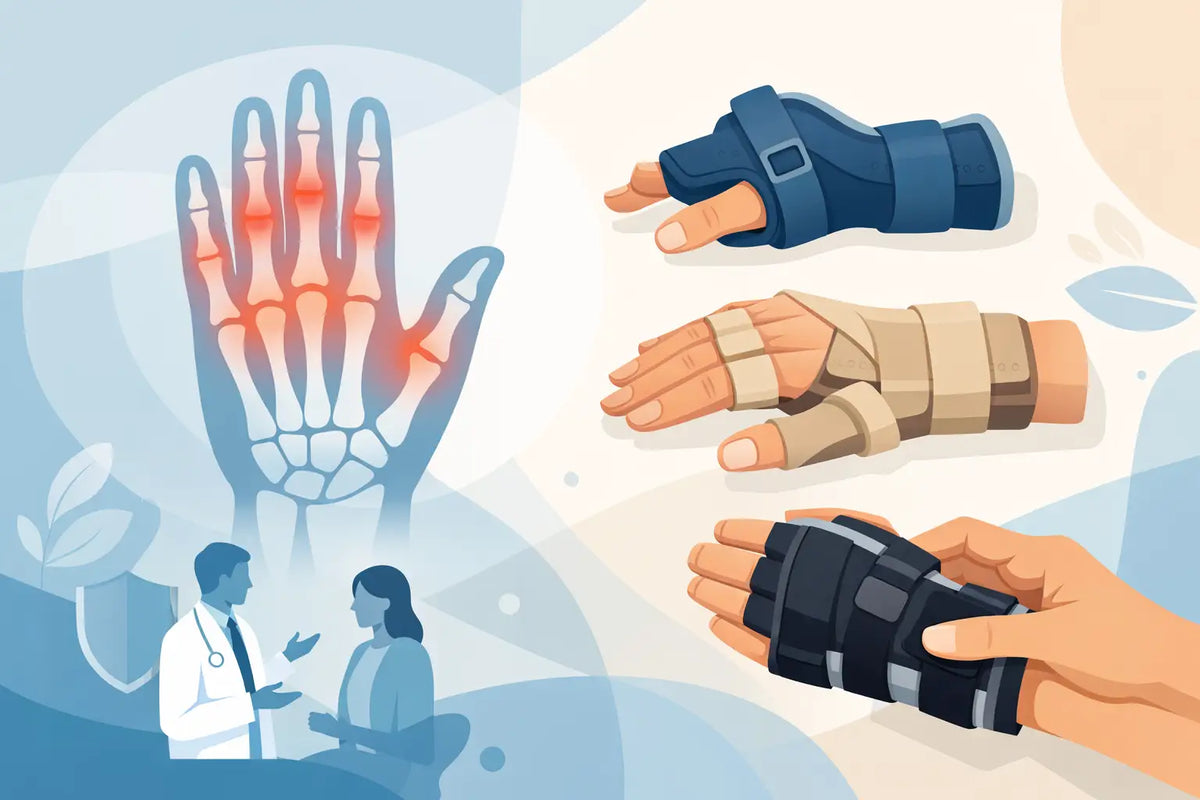

Leave a comment
This site is protected by hCaptcha and the hCaptcha Privacy Policy and Terms of Service apply.