


A jar lid that once took seconds to open can become a painful test of grip. So can typing, fastening a button, lifting a kettle, or holding a steering wheel. A hand splint for arthritis is designed to reduce stress on irritated joints during these everyday movements, while providing the degree of support your hand, wrist, thumb, or fingers require.
The right splint is not simply the stiffest one available. Arthritis affects different joints in different ways, and support that is useful for thumb-base pain may be unhelpful for swollen finger joints or a painful wrist. A well-chosen brace should make activity more manageable without unnecessarily limiting the movement you still need.
What a Hand Splint Can Do for Arthritis
Arthritis can affect the hand through joint pain, stiffness, swelling, reduced grip strength, altered alignment, or a sense that a joint cannot tolerate normal loading. Osteoarthritis commonly affects the thumb base and end or middle finger joints. Inflammatory conditions, including rheumatoid arthritis and psoriatic arthritis, may create more widespread pain, swelling, and morning stiffness. Your diagnosis, symptom pattern, and treatment plan all influence the type of support that makes sense.
A splint may help by holding a painful joint in a more protected position, limiting movements that provoke symptoms, and improving awareness of how the hand is being used. Some designs also provide gentle compression, which can feel supportive around mildly swollen or sensitive tissues. This does not treat the underlying disease process, replace medication, or correct established joint damage. Its role is practical: to reduce mechanical strain and help you continue with appropriate daily activity.
For many people, the most useful outcome is energy conservation. If the thumb or wrist is supported during repetitive tasks, the hand may not have to work as hard to stabilize itself. That can be particularly valuable at work, during household tasks, or while returning to activity after a flare.
Choosing a Hand Splint for Arthritis by Pain Location
The location of symptoms should guide the first decision. Broad labels such as “arthritis glove” or “hand brace” can be misleading because products within those categories may offer very different levels of stabilization.
Thumb-base pain
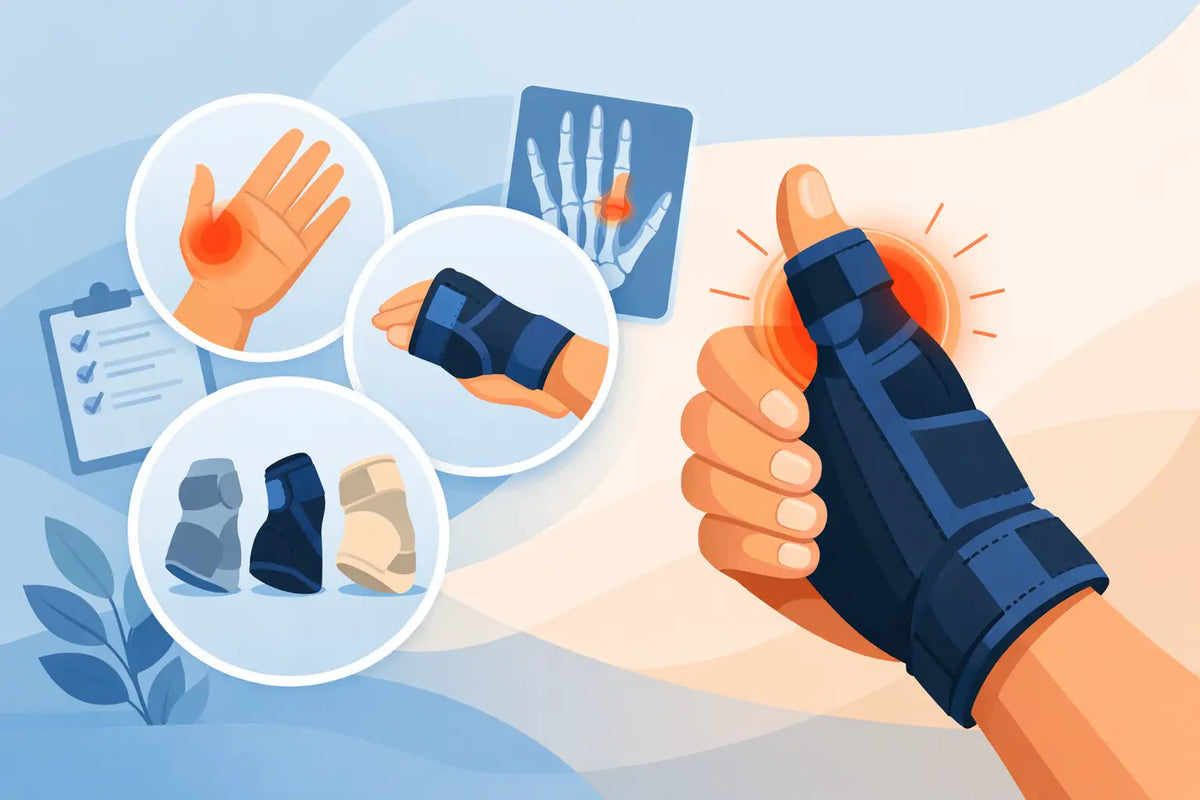
Pain at the base of the thumb is often felt when pinching, turning keys, opening containers, or lifting objects with the thumb spread away from the hand. A thumb-support or thumb spica design can stabilize the thumb carpometacarpal joint and, depending on its construction, part of the wrist. This can reduce painful thumb motion while leaving the fingers available for many functional tasks.
The trade-off is dexterity. A longer, more structured thumb splint typically offers greater control but may make fine tasks more difficult. A lower-profile option can be easier to wear during the day, although it may not provide enough support during more demanding activities. The best choice depends on whether your priority is protection during a flare, all-day work use, or support for a specific activity.
Wrist and hand pain
If arthritis symptoms involve the wrist, a wrist support with an integrated palmar stay may be appropriate. It can help maintain a more neutral wrist position, especially when gripping, typing, lifting, or performing repetitive manual work aggravates discomfort.
A wrist splint should not press into the palm or restrict finger movement unnecessarily. The fingers need room to flex for functional grip, while the wrist receives controlled support. For people with both wrist and thumb symptoms, a combined wrist-thumb orthosis may be considered, ideally with advice from a physician, occupational therapist, physiotherapist, or hand specialist.
Finger joint pain or altered alignment
Finger splints are more specific tools. They may be used to limit painful motion, support a particular joint, or help manage joint positioning. Because finger anatomy and arthritis patterns vary considerably, sizing and design matter greatly. A poorly fitted finger splint can create pressure points, interfere with circulation, or affect neighbouring joints.
When multiple finger joints are painful, a generic hand support may not be the answer. A clinician can assess whether a custom or condition-specific option is more suitable, particularly where there is visible joint deformity, significant loss of motion, or an inflammatory arthritis diagnosis.
Pain at rest or overnight stiffness
Some people benefit from a resting hand orthosis that supports the wrist and fingers in a relaxed functional position. These are usually intended for rest periods or nighttime rather than for cooking, driving, or other active tasks. They can be helpful when prolonged positioning contributes to stiffness or discomfort, but wearing a restrictive resting splint during the day can reduce function and may not be appropriate without professional guidance.
Support Level, Materials, and Fit Matter
A hand splint for arthritis should feel purposeful, not punishing. Structured stays, mouldable elements, and stabilizing straps can provide meaningful control for unstable or highly painful joints. Softer materials and lighter compression may be more suitable when the goal is warmth, comfort, mild support, or symptom management during lower-demand activity.
More support is not always better. An overly rigid brace can make it difficult to perform essential tasks, cause pressure over tender joints, or encourage reliance when gradual, comfortable movement is beneficial. Conversely, a soft support may feel pleasant but offer too little stability for thumb-base arthritis or painful wrist loading.
Fit is equally important. Follow the manufacturer’s sizing instructions and measure at the indicated landmarks rather than choosing by glove size alone. Fasten straps firmly enough to prevent migration, but not so tightly that they leave deep marks, cause tingling, or make the fingers cold, pale, or blue. The support should sit smoothly against the skin, without bunching in the palm or sharp pressure at bony areas.
If swelling changes through the day, reassess the fit. People with inflammatory arthritis may need to adjust straps as symptoms fluctuate. If a brace causes increased pain, numbness, skin irritation, or worsening swelling, remove it and seek advice from a health professional.
When and How Long to Wear a Splint
Wear timing should match the reason for using the splint. A thumb support may be most valuable during tasks that reliably trigger pain, such as gardening, computer work, food preparation, or lifting. A wrist splint may be useful for a defined work period or after an activity that tends to aggravate symptoms. Resting orthoses are generally used during rest or sleep when prescribed for that purpose.
Avoid assuming that a splint should be worn continuously. Long periods of immobilization can contribute to stiffness and weakness in some situations. Your physician or therapist may recommend a specific schedule based on joint inflammation, instability, surgery, injury history, and functional goals. If you are buying support independently, begin with shorter periods during the activities that cause symptoms, then assess whether it improves comfort and function.
A practical test is to notice what changes while wearing it. Can you complete the task with less pain? Does the brace stay in position? Are the fingers still able to move as needed? Is discomfort reduced after the activity rather than increased? These observations help determine whether the support is serving a useful purpose.
Use a Splint Alongside a Wider Arthritis Plan
Splinting works best as one part of arthritis management. Joint-protection strategies can reduce strain just as much as a brace in some circumstances. Using two hands to lift heavier objects, choosing larger-handled tools, taking short breaks from repetitive gripping, and avoiding forceful pinch when possible can all lessen demand on painful joints.
Gentle range-of-motion and strengthening exercises may also be part of a clinician-guided plan. The goal is usually not to avoid using the hand altogether, but to use it with better support, more efficient mechanics, and an appropriate balance of activity and recovery.
For Canadian customers purchasing an orthopedic support, retain product documentation and your prescription if one has been provided. Many extended health plans require a physician’s prescription and supporting documentation for reimbursement, although coverage rules vary by insurer and plan. A health practitioner can also help identify the correct category of support before purchase, which is particularly valuable for complex arthritis symptoms or multi-joint involvement.
If hand pain is suddenly severe, follows an injury, is associated with marked redness or heat, or comes with progressive numbness or weakness, seek timely medical assessment rather than relying on a splint alone. The most effective support is one that fits your diagnosis, protects the joint that needs help, and still lets your hands take part in the life you want to lead.


Leave a comment
This site is protected by hCaptcha and the hCaptcha Privacy Policy and Terms of Service apply.