

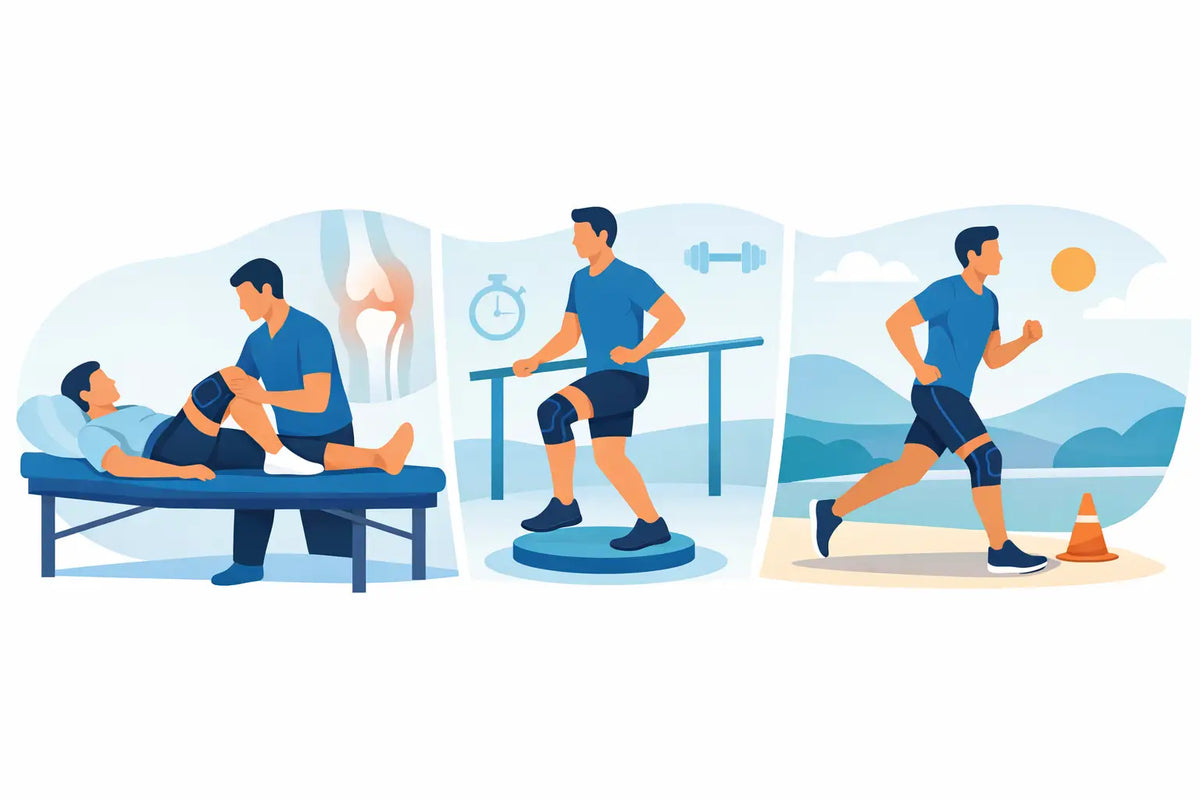
A reconstructed ACL is not simply waiting to heal. Throughout recovery, the knee is responding to swelling, range of motion, muscle control, loading tolerance and the demands you plan to place on it later. That is why useful ACL rehabilitation examples are not a fixed exercise sheet. They show how rehabilitation goals change from protecting the knee at home to preparing for work, running or pivoting sport.
Your surgeon and physiotherapist should set the pace, particularly if an ACL reconstruction was completed alongside meniscus repair, cartilage treatment or another procedure. Timelines vary, and a movement that is appropriate for one person at six weeks may be premature for another.
What makes an ACL rehabilitation plan effective?
A sound plan restores more than knee bending. It addresses full extension, quadriceps strength, hip and trunk control, balance, confidence and gradual exposure to the activities that matter to the individual. For a warehouse worker, that may mean repeated lifting and safe stair use. For a skier or soccer player, it includes deceleration, cutting and reactive movement.
Symptoms help guide progression. Mild muscle fatigue after a new strengthening session can be expected. Increased swelling, worsening pain, loss of knee extension, a limp that returns, or a sense that the knee is giving way are signs to reduce the load and speak with the treating clinician. More exercise is not always better if the joint is not tolerating it.
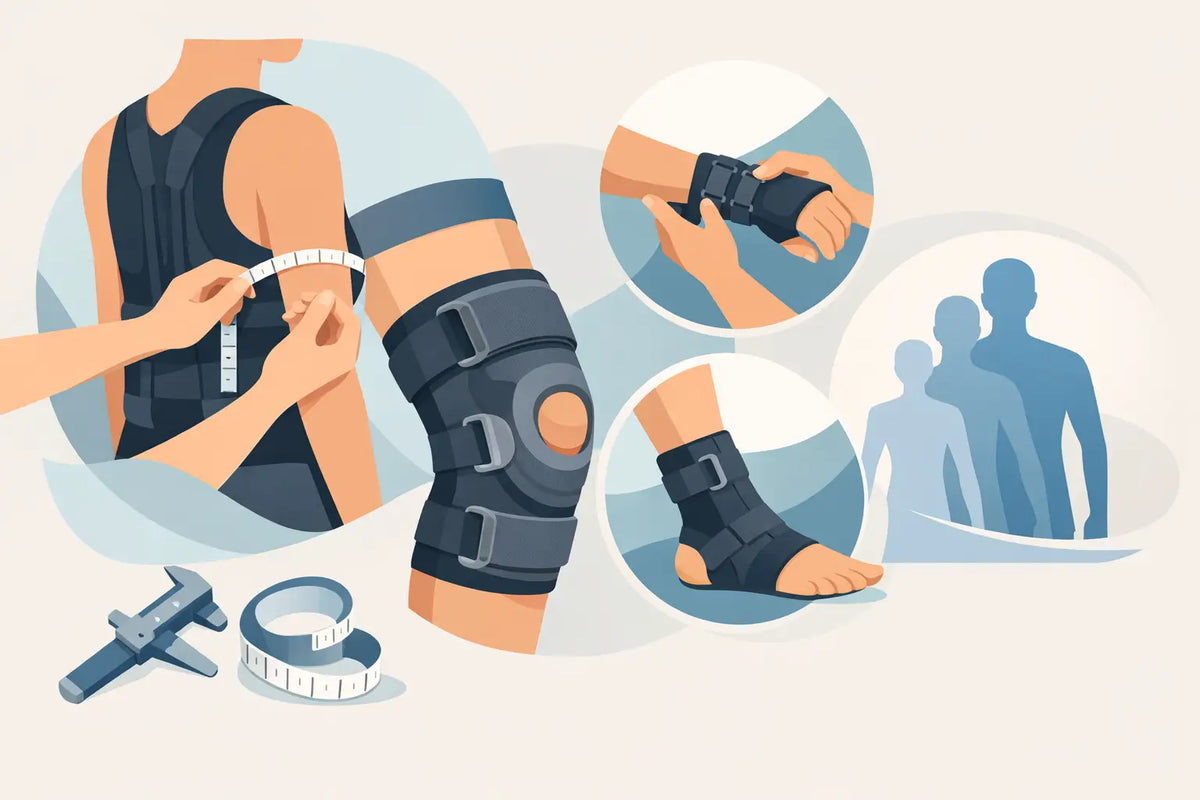
A hinged knee brace may be prescribed in the early period or for specific activities. It can help limit motion where needed and provide purposeful stabilization, but it does not replace strength training or movement retraining. The brace type, range-of-motion settings and wearing schedule should follow the surgeon's or physiotherapist's direction.
ACL rehabilitation examples: early protection and motion
Days 1 to 14: settle swelling and restore extension
Early rehabilitation often looks less dramatic than patients expect. The priorities are managing swelling, regaining the ability to fully straighten the knee, gently improving flexion, reactivating the quadriceps and walking with the prescribed assistive device or brace.
Examples may include ankle pumps, heel slides within the permitted range, supported knee-extension positioning, quadriceps sets and straight-leg raises once the knee can remain straight without lag. Short, frequent practice is commonly more useful than forcing one long session through pain.
Walking mechanics deserve attention from the start. If a person is limping, loading unevenly or unable to control the knee, progressing distance too quickly can reinforce poor movement patterns. A physiotherapist may use gait drills and gradually reduce crutch use only when the knee has enough control.
If meniscus repair was performed, weight-bearing and bending restrictions can be stricter. This is a meaningful trade-off: protecting the repaired tissue may slow the early exercise menu, but it supports the healing priorities of the combined procedure.
Weeks 2 to 6: build control before loading heavily
As swelling settles and motion improves, rehabilitation generally shifts toward controlled weight-bearing and foundational strength. Typical examples include mini-squats to a comfortable depth, sit-to-stand practice, step-ups on a low platform, bridge variations, calf raises and stationary cycling when the available knee bend allows it.
The focus is quality. During a squat or step-up, the knee should track in line with the foot rather than collapsing inward. The pelvis should remain controlled rather than dropping to one side. These details matter because ACL injury risk is linked not only to force, but also to how the body manages force.
Balance work may start with supported single-leg standing and progress to less hand support or an unstable surface when appropriate. The goal is not to make every exercise difficult. It is to teach the recovering leg to respond reliably to everyday changes in position.
Middle-phase examples: strength, endurance and symmetry
Weeks 6 to 12: develop usable leg strength
Once the surgeon and physiotherapist approve progression, resistance training becomes increasingly central. The quadriceps often remains weaker than it appears, even when walking feels normal. Common ACL rehabilitation examples in this phase include leg press in an approved range, split squats, controlled step-downs, hamstring curls, Romanian deadlifts, hip abductor strengthening and progressively challenging cycling or elliptical sessions.
Single-leg work is particularly valuable because daily life rarely loads both legs equally. A controlled step-down can expose differences in knee alignment, balance and eccentric quadriceps control that are hidden during a double-leg squat.
Load should increase gradually. A person who completes an exercise with stable alignment, no sharp pain and no significant swelling afterward may be ready for more resistance, repetitions or range of motion. If the knee remains irritated into the next day, the previous dose was likely too high.
Some patients benefit from a supportive knee orthosis during longer walks, work duties or a transition back to low-impact training when recommended by their care team. A properly fitted support should feel secure without pinching, sliding or causing numbness. Sporlastic Canada offers orthopedic supports designed as treatment tools, with product selection best guided by the diagnosis, required stabilization and clinician recommendation.
Months 3 to 5: prepare for impact, not just gym exercises
At this stage, the program may include heavier strength training and more demanding single-leg tasks. Examples include loaded split squats, single-leg leg press, lateral step-downs, single-leg Romanian deadlifts, hamstring-focused exercises and longer cardiovascular sessions.
The rehabilitation plan should also begin bridging the gap between controlled gym movements and real-life demands. For someone returning to a job involving ladders, uneven ground or repeated carrying, that may mean supervised step, carry and directional-control drills. For an athlete, it may mean landing practice from a small step, first emphasizing quiet, symmetrical landings with good knee and hip alignment.
Not everyone is ready to run at the same calendar date. Before running, clinicians commonly look for minimal swelling, sufficient motion, controlled single-leg loading and meaningful strength recovery. Passing time alone is not a readiness test.
Late-stage ACL rehabilitation examples for running and sport
Return-to-run progression
A return-to-run plan often begins with a walk-jog interval on a predictable surface. For example, a clinician may prescribe brief jogging intervals separated by walking, then increase the running portion only if the knee remains calm during and after the session. Distance, speed and hills are usually added one variable at a time.
Strength work continues during this period. Running is a new load, not a replacement for quadriceps, hamstring, hip and calf training. If soreness or swelling rises as running volume increases, the answer may be to hold the current level rather than abandoning rehabilitation entirely.
Plyometrics, cutting and sport-specific control
For people returning to pivoting sports, late-stage rehabilitation must include deceleration and change-of-direction practice. Examples can progress from two-leg hops and landing drills to single-leg hops, lateral bounds, planned cuts, unplanned reaction drills and sport-specific patterns such as receiving a pass, stopping and changing direction.
The order matters. A controlled planned movement comes before reacting to a coach's cue or another player's movement. A straight-line jog comes before repeated sharp cutting. This gradual increase in complexity helps identify whether the knee and the whole lower limb can tolerate demand without loss of control.
Formal return-to-sport testing may compare the surgical and non-surgical legs through strength measures, hop tests, movement assessment and patient-reported confidence. Symmetry is useful, but it is not the only consideration. If both legs are deconditioned, a symmetrical result may still fall short of the demands of the intended sport.
How to adapt exercises to your goal
The same reconstructed ACL can lead to different rehabilitation priorities. A recreational cyclist may place greater emphasis on sustained pedalling tolerance and progressive hill work. A parent whose daily routine involves lifting a child may need squatting, carrying and stair-control practice. A competitive court athlete needs repeated jumping, landing, sprinting and cutting under fatigue.
This is why rehabilitation should be specific without becoming rushed. The most advanced exercise is not automatically the most appropriate one. An exercise earns its place when it addresses a current limitation and can be performed with good control.
Questions to take to your physiotherapy visit
Ask whether you have full knee extension, whether swelling is still limiting progress, and which strength or movement benchmark should guide the next phase. If you use a brace, ask when it is needed, how it should fit and whether its settings need to change. For work or sport, describe the actual tasks you need to resume rather than simply asking when you can return.
Recovery is built through many well-executed sessions, not one difficult workout. Use each phase to restore the movement quality needed for the next one, and let your knee's response and your clinical team guide the pace.

Leave a comment
This site is protected by hCaptcha and the hCaptcha Privacy Policy and Terms of Service apply.