
A knee sleeve can feel very different after a long shift, a return to running, or the first weeks of rehabilitation. This knee sleeve comparison focuses on the details that determine whether a support is merely comfortable or genuinely appropriate for your symptoms, activity and treatment plan. The right choice is not always the most rigid or the most compressive option. It is the support that provides the intended level of guidance while allowing you to move safely and consistently.
Knee sleeve comparison: start with the support objective
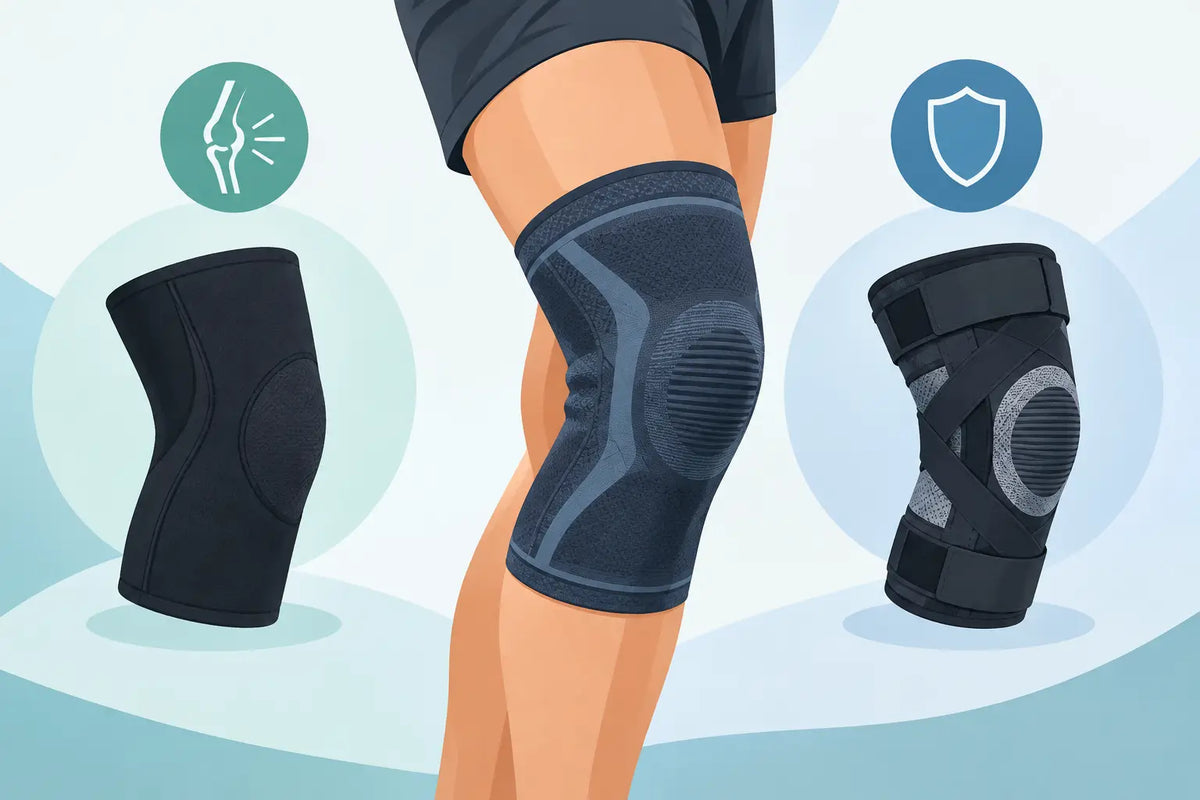
A standard elastic knee sleeve applies circumferential compression around the joint. It may help manage mild swelling, provide warmth, and improve proprioception - the body's awareness of knee position during movement. For many people with occasional overuse discomfort, early osteoarthritis symptoms, or mild soreness after activity, this simple construction can be enough.
More technical sleeves add targeted features such as silicone inserts around the kneecap, elastic straps, anatomically shaped knit zones, or flexible side stays. These designs are intended to influence how the support sits, how pressure is distributed, and how much guidance the knee receives during flexion and extension. They are often considered when discomfort is more localised, confidence in the joint has decreased, or a clinician has identified a specific structure that needs support.
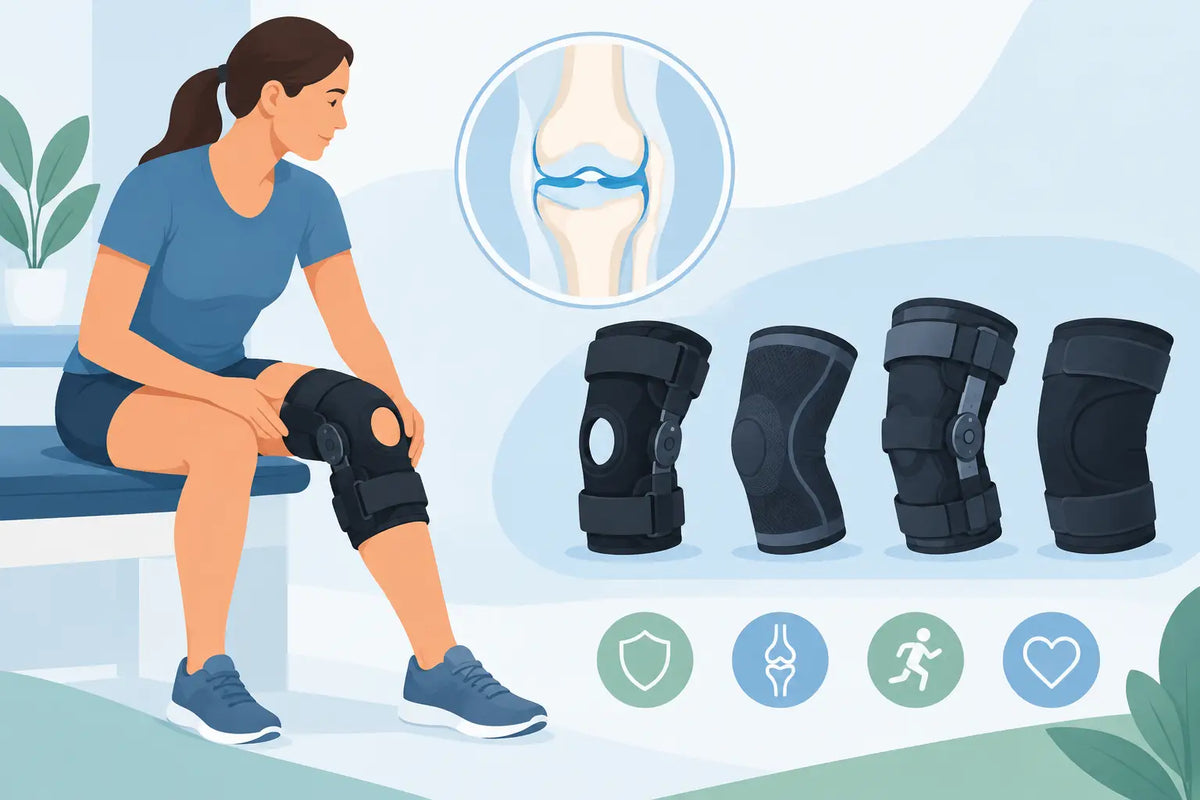
A sleeve is not interchangeable with a hinged knee brace. If you have significant ligament laxity, a recent substantial injury, recurring giving-way, or a post-operative protocol, a brace with more structured stabilisation may be more suitable. A sleeve can complement rehabilitation, but it should not be expected to control instability that requires a higher level of support.
Compression is useful, but more is not always better
Compression is commonly described in millimetres of mercury, or mmHg. This measurement helps distinguish a lightly supportive sleeve from a medically oriented compression product. The practical effect also depends on the knit, anatomical fit, and whether pressure is graduated or concentrated around particular parts of the knee.
Lower compression is often appropriate when the priority is comfortable daily wear, mild swelling control, warmth, or awareness during exercise. Moderate compression can be helpful for people who need a firmer sensory and supportive effect while walking, working, or training. Higher compression may be selected for more pronounced swelling or a specific treatment objective, usually with guidance from a health professional.
The strongest sleeve is not automatically the best sleeve. Excessive pressure can feel restrictive, roll at the edges, or become difficult to tolerate through a full workday. It may also be unsuitable for people with certain circulation concerns, reduced sensation, skin fragility, or conditions that need medical assessment. A properly selected support should feel close-fitting and purposeful, not numb, cold, pinching, or painful.
Why knit construction matters
Premium knitted sleeves are usually shaped to follow the knee rather than cut as a straight tube. This matters because the knee changes circumference as it bends. A contoured design, with flexible zones behind the knee and stabilising zones around the joint, is more likely to remain in place when climbing stairs, squatting, cycling, or getting in and out of a vehicle.
Look for breathable, skin-friendly materials and soft edge finishes, particularly if the sleeve will be worn under work trousers or for several hours at a time. Silicone grip bands can improve retention, but they are not suitable for every skin type. If you have sensitivity to silicone, adhesive materials, or compression garments, review product materials before ordering.
Compare sleeves by the area of discomfort
The location and behaviour of pain often provide a more useful starting point than the phrase “knee pain.” A general compression sleeve may suit diffuse aching or mild activity-related discomfort. When symptoms involve the kneecap, a patella-focused sleeve may be a better match. These supports can include a shaped silicone ring or buttress designed to guide the patella and reduce pressure on sensitive surrounding tissues during movement.
For discomfort associated with meniscal irritation, mild joint degeneration, or recurring swelling, an anatomically knitted compression sleeve with supportive side zones may offer a more substantial option than a basic neoprene tube. It can provide controlled compression without the bulk that may make everyday clothing difficult.
If the knee feels unstable from side to side, consider whether a sleeve with flexible lateral stays is indicated. These stays can add directional guidance while preserving mobility for many daily activities. However, suspected collateral ligament injury, major instability, or a knee that repeatedly buckles deserves professional assessment. A more protective brace, diagnostic imaging, or a structured rehabilitation plan may be needed.
Patellar support versus an open-patella design
An open-patella sleeve leaves the kneecap uncovered. Some people prefer the sensation of reduced direct pressure, especially when the patella is tender. Others find that a closed knit or an integrated silicone pad provides more comfortable contact and better support during activity.
There is no universal winner. The best choice depends on your diagnosis, the shape of your knee, the presence of swelling, and how the support feels during the movements that matter to you. If stair descent, repeated kneeling, or cycling aggravates symptoms, test fit and comfort in those positions rather than relying only on how the sleeve feels while standing.
Fit determines whether the knee sleeve performs
A well-designed sleeve cannot work as intended if it is the wrong size. Do not choose based on clothing size or how tight you believe a support should feel. Follow the product's measurement instructions, which commonly use the circumference above and below the knee joint. Measure against bare skin, ideally when swelling is representative of your normal day.
Put the sleeve on without twisting it, position any patellar insert as directed, and smooth the fabric to remove folds. Walk, sit, bend the knee, and climb a few steps. The sleeve should remain aligned without gathering behind the knee or cutting deeply into the thigh or calf. Mild compression marks after removal can be normal; persistent indentations, tingling, colour change, or pain are signs to remove the product and reassess sizing or suitability.
Fit may also change over the course of recovery. A sleeve that was appropriate while swelling was present may become too loose as the knee settles. Conversely, a period of inflammation can make a previously comfortable size feel restrictive. Re-measuring is a practical part of ongoing knee management, not an inconvenience.
Match the sleeve to your daily demands
For sport, prioritise retention during dynamic movement, breathable construction, and a profile that works with your footwear and training clothing. A runner with mild anterior knee discomfort may value patellar guidance and low bulk. A recreational skier or court-sport athlete with mild lateral instability may need more directional support, subject to clinical advice.
For physically demanding work, durability and all-day comfort become central. The best sleeve must tolerate repeated bending, lifting, stair use, and time on your feet without slipping or becoming distracting. If kneeling is unavoidable, remember that a compression sleeve is not the same as impact protection. Additional knee protection may be required for the task.
For osteoarthritis or ongoing joint discomfort, comfort across routine activities usually matters more than maximum restriction. A supportive sleeve may make walking, errands, and gentle exercise more manageable, but it works best alongside strength, mobility, pacing, and the plan provided by your care team. A support is a treatment tool, not a substitute for addressing the factors that are placing load on the joint.
When to move beyond a sleeve
Seek medical guidance promptly after a significant twist, fall, pop, rapid swelling, inability to bear weight, locking, fever, redness, or calf pain. These symptoms are not situations to solve by choosing a firmer sleeve. Similarly, persistent pain that is worsening or disrupting sleep warrants assessment.
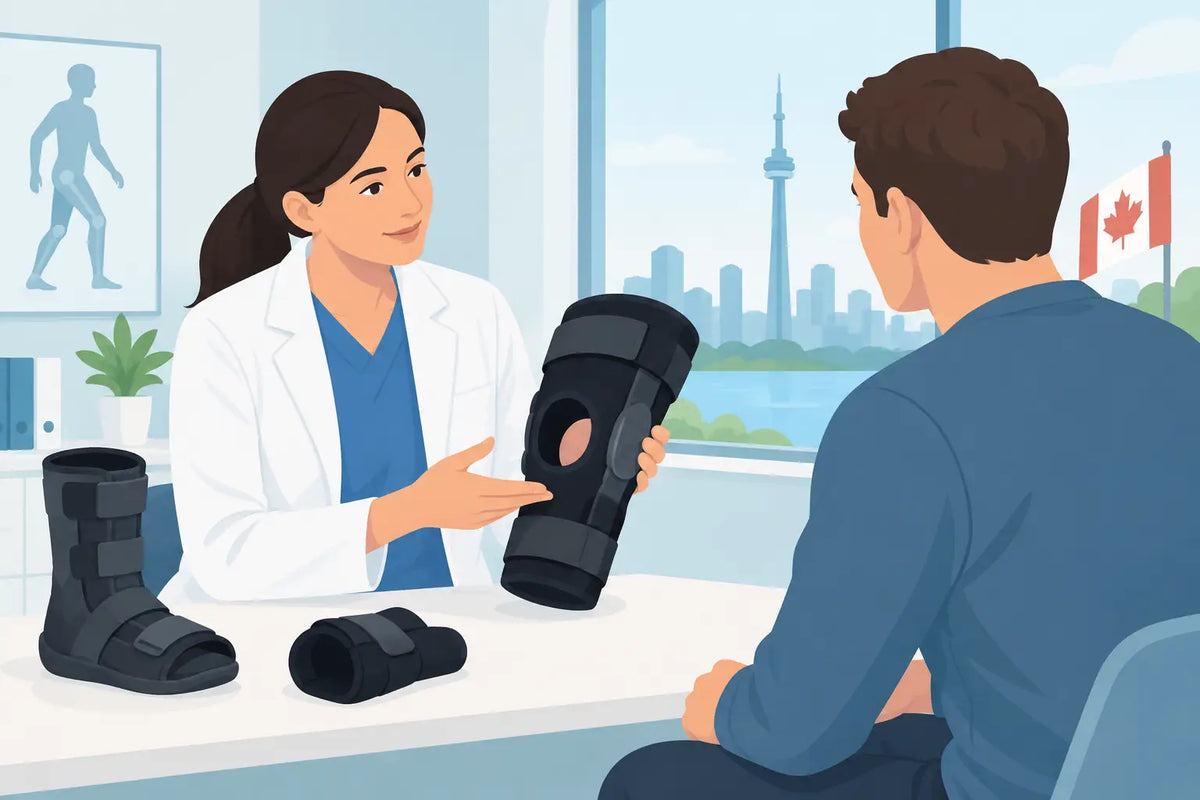
A physician, physiotherapist, chiropractor, occupational therapist, or orthopedic specialist can help identify whether compression, patellar control, ligament support, or a post-operative brace is appropriate. If insurance reimbursement is part of your purchase decision, ask what documentation is required before ordering. A physician prescription and detailed product documentation are commonly relevant to extended health benefit claims, although coverage varies by plan.
Sporlastic Canada supports this decision process with German-engineered orthopedic products designed around specific support objectives rather than one-size-fits-all solutions. When you compare knee sleeves by indication, compression, support architecture and fit, you can select a product that has a clear role in your movement and recovery plan.
The most useful knee support is the one you can wear correctly, tolerate through the activities that matter, and review with your care provider as your knee changes. Let symptoms, function, and professional guidance lead the choice - not the assumption that more support is always better.

Leave a comment
This site is protected by hCaptcha and the hCaptcha Privacy Policy and Terms of Service apply.