

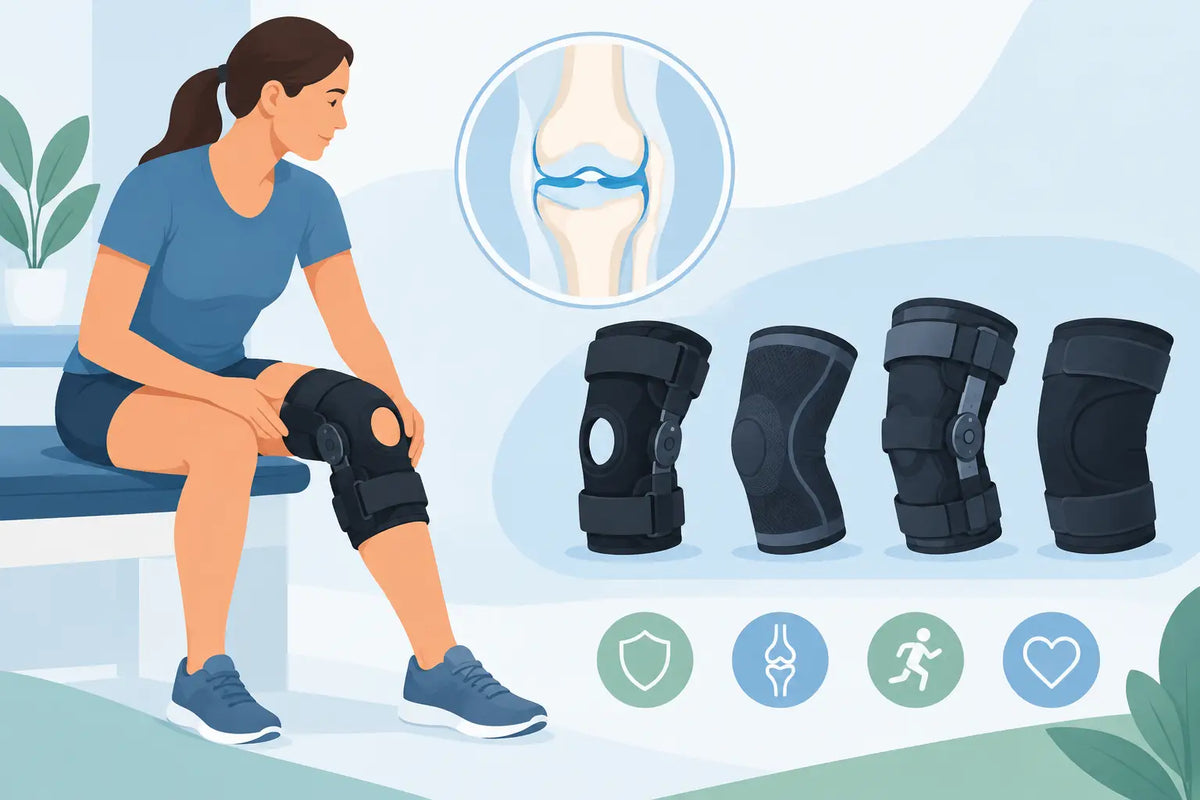
A meniscus injury can make ordinary movements unexpectedly difficult. A turn to reach the back seat, a deep bend at work, or the first few steps after sitting may trigger joint-line pain, catching, swelling, or a sense that the knee cannot be trusted. A meniscus recovery brace selection guide should therefore begin with your treatment stage and symptoms, not with the most rigid brace available.
A knee brace cannot repair torn meniscal tissue or replace a rehabilitation plan. It can, however, provide purposeful compression, proprioceptive feedback, and mechanical guidance while the knee settles after injury, arthroscopy, repair, or partial meniscectomy. The appropriate level of support depends on whether you need swelling management, protection from movement, help with instability, or confidence during a gradual return to daily activity.
Start with the meniscus diagnosis and treatment plan
The meniscus is a crescent-shaped cartilage structure that helps distribute load between the femur and tibia. Tears vary considerably. A small degenerative tear may be managed conservatively with activity modification and physiotherapy, while a displaced tear that causes locking may require orthopedic assessment. Following surgery, the restrictions after a meniscal repair are often more protective than those after a partial meniscectomy because the repaired tissue needs time to heal.
This distinction affects brace selection. If your surgeon has prescribed a specific brace, range-of-motion setting, weight-bearing restriction, or wearing schedule, that instruction comes first. A commercially available support should not be substituted for a post-operative immobilizer or hinged brace when your care team has indicated one.
Contact a physician or orthopedic specialist promptly if the knee is locked, cannot bear weight, becomes increasingly hot or swollen, gives way repeatedly, or you develop calf pain, unusual shortness of breath, fever, or wound concerns after surgery. A brace is a treatment tool, but it is not a solution for symptoms that require assessment.
Meniscus recovery brace selection by recovery stage
Early injury or post-operative protection
Immediately after an injury or procedure, the priority may be limiting motion and protecting the knee during walking. A hinged knee brace can be appropriate when a clinician wants controlled flexion and extension rather than unrestricted bending. Its bilateral hinges provide a more structured frame than a soft sleeve, and many clinical designs can be adjusted to the range of motion prescribed by the treating professional.
This level of support has trade-offs. Hinged braces are more noticeable under clothing, require careful positioning, and may be excessive for uncomplicated soreness once formal restrictions have ended. They are best chosen according to a clinician's direction, particularly after meniscal repair, combined ligament injury, or procedures involving cartilage restoration.
Swelling, mild pain, and everyday movement
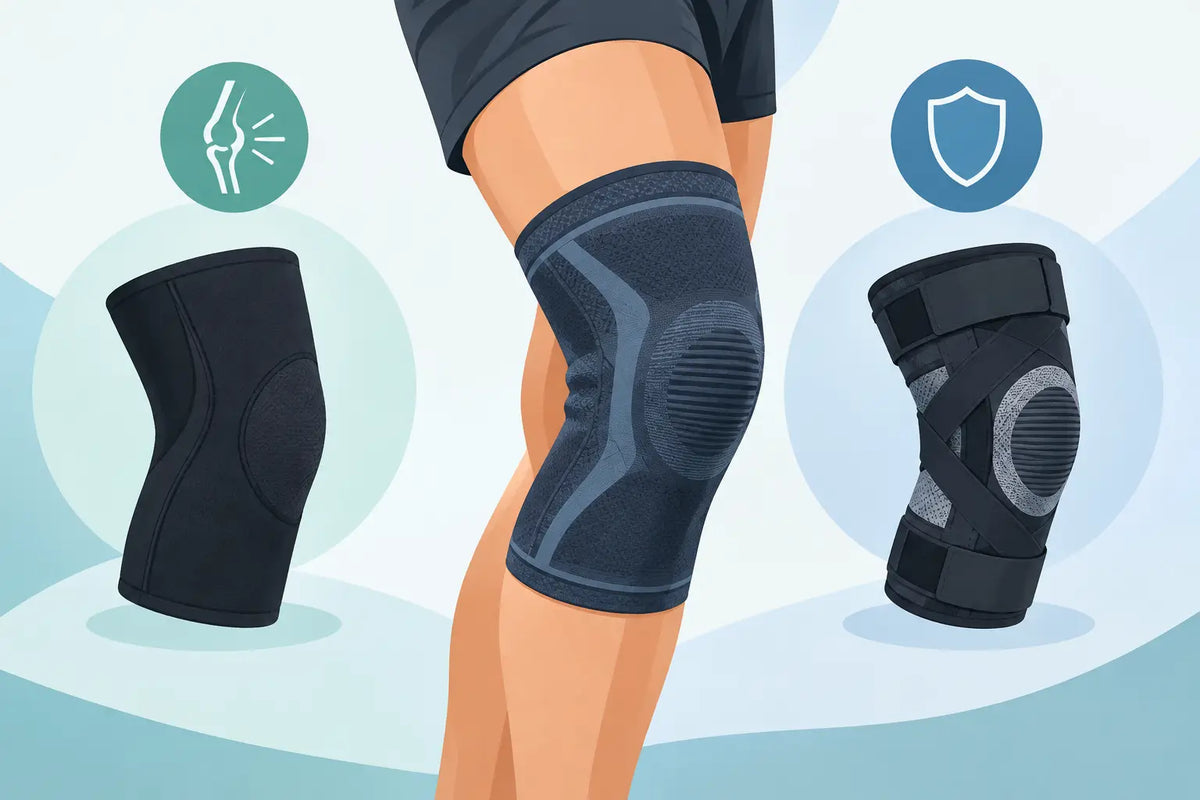
When protection requirements are lower, a compressive knee support may be the better fit. Graduated compression can help manage mild swelling and provide a secure, supported feeling through the joint during standing, walking, and therapeutic exercise. A well-designed knit support should sit smoothly against the skin, resist rolling at the edges, and maintain its position without creating pressure behind the knee.
For many people recovering from a non-operative meniscal irritation or progressing after surgery, this is the most practical category. It supports routine movement without unnecessarily restricting the motion needed to rebuild quadriceps strength and normalize gait.
Instability or greater activity demands
A meniscus tear does not always cause true ligament instability. Still, some people experience a subjective sense of giving way, especially when swelling has reduced muscle control or when meniscal injury occurs alongside ACL, MCL, or degenerative joint concerns. In these situations, a brace with stabilizing side elements or hinges may provide more guidance than a simple sleeve.
The objective is controlled confidence, not complete dependence. If the knee still buckles despite appropriate bracing, the cause may be weakness, pain inhibition, ligament involvement, or mechanical symptoms that need clinical review. Increasing brace rigidity without addressing the underlying issue is rarely the best next step.
Choose support features that match how you move
A brace should be judged by what it does during the activities you need to resume. For a desk-based worker, low-profile compression and comfort through prolonged sitting may matter most. For a warehouse employee, gardener, skier, or recreational athlete, resistance to migration and more substantial lateral support may be more relevant.
Look closely at the support architecture. Medical-grade knit fabric can offer even, comfortable compression while remaining breathable enough for extended wear. Anatomically shaped construction helps prevent bunching as the knee bends. Silicone bands or similarly designed retention zones can help the brace stay in place, while padded or flexible side stays may add stability without the bulk of a rigid post-operative frame.
Patellar openings and pads deserve consideration as well. They are intended primarily to guide or relieve pressure around the kneecap, not to treat the meniscus directly. They may be useful if anterior knee discomfort accompanies your recovery, but they are not automatically necessary for every meniscal condition. Choose the design based on your full symptom pattern and the recommendation of your practitioner.
Fit is part of the treatment
Even a high-quality knee brace will not perform properly if it is the wrong size. A loose support can slide down, wrinkle behind the knee, and provide inconsistent compression. One that is too tight can cause numbness, tingling, skin irritation, or uncomfortable pressure at the thigh and calf.
Follow the product-specific measurement instructions rather than assuming your usual clothing size. Knee supports are commonly sized using circumference measurements taken at defined points above and below the kneecap. Measure against bare skin, keep the tape level, and use the same leg position specified in the instructions. When your measurements fall between sizes, the correct decision depends on the product's size chart, the intended compression level, and whether post-injury swelling is likely to fluctuate.
Put the brace on with the knee in a comfortable, slightly bent position, then smooth the fabric upward and downward so the knitted zones and stabilizers align with the joint. The brace should feel secure when walking and bending, but it should not pinch at the back of the knee or leave deep, persistent marks. Recheck the fit after several minutes of movement rather than judging it only while seated.
Know when to wear it and when to step back
Wear time should reflect your clinician's advice and your symptoms. A hinged brace may be worn during all weight-bearing activity in the early phase if prescribed. A compression support may be most useful during work, walks, rehabilitation sessions, or higher-demand activities while symptoms are improving.
Continuous wear is not always helpful. Unless your care team has specifically instructed otherwise, remove the brace for skin checks, hygiene, and sleep. Rehabilitation also requires regular movement and progressive strengthening. A brace can make activity more manageable, but it should not become a reason to avoid the exercises that restore strength, balance, and knee control.
Pay attention to what changes when you use it. Reduced swelling after activity, improved confidence on stairs, and better tolerance for walking are useful signs. Increasing pain, new numbness, skin changes, or a feeling that the brace alters your gait unfavourably are reasons to reassess fit and speak with your practitioner.
Practical purchasing considerations in Canada
If your brace is part of a physician-directed recovery plan, keep the prescription, invoice, and product documentation. Extended health plans may reimburse eligible orthopedic braces when they are prescribed, but requirements differ by insurer. Confirm whether your plan requires a physician prescription, a specific brace category, or documentation from an authorized provider before purchasing.
For post-operative or clinically complex cases, bring the product details to your physiotherapist, surgeon, chiropractor, or orthopedic clinic. They can confirm whether the brace's compression, stabilization features, and motion control align with your current restrictions. This is particularly valuable when a meniscal injury is combined with ligament laxity, osteoarthritis, or a return-to-work requirement.
A brace should make the next appropriate step in recovery feel safer and more manageable - whether that is a short walk, a therapy session, or a full shift on your feet. Select the level of support your knee needs now, then revisit that choice as healing, strength, and confidence progress.

Leave a comment
This site is protected by hCaptcha and the hCaptcha Privacy Policy and Terms of Service apply.