

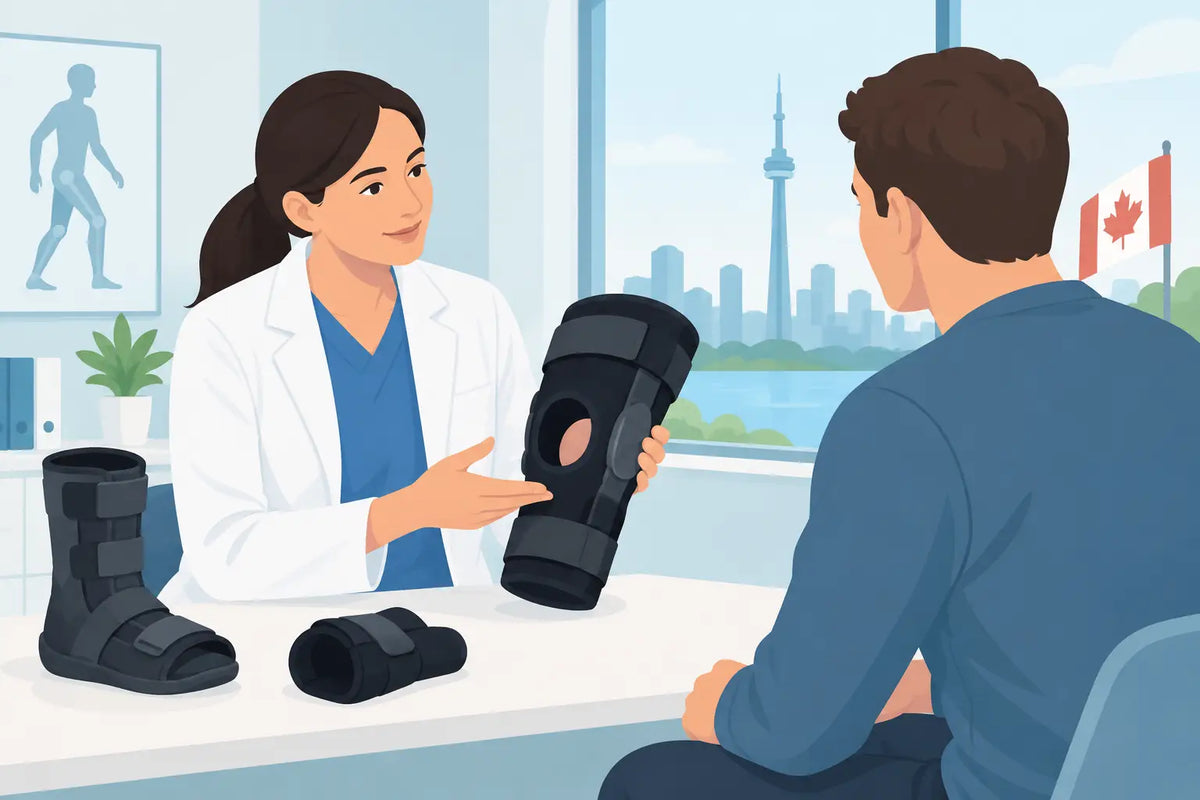
A painful knee on the stairs, a wrist that gives way at work, or an ankle that still feels unstable after a sprain can make finding support feel urgent. But is a brace prescription required before you can buy an orthopedic brace in Canada? In many cases, no. You can often purchase an appropriate off-the-shelf brace directly. A prescription may become necessary, however, when you are seeking insurance reimbursement or when a clinician recommends a specific treatment approach.
The practical distinction matters. The right brace is not simply an accessory for a sore joint. Its compression, fit, support architecture, and range-of-motion control should suit the body area, the condition, and the demands of daily life.
Is a Brace Prescription Required to Buy a Brace?
For many ready-to-wear orthopedic braces and compression supports, a physician prescription is not required to make a purchase. People commonly select supports for mild instability, activity-related discomfort, recovery following a minor injury, or additional confidence during work and exercise.
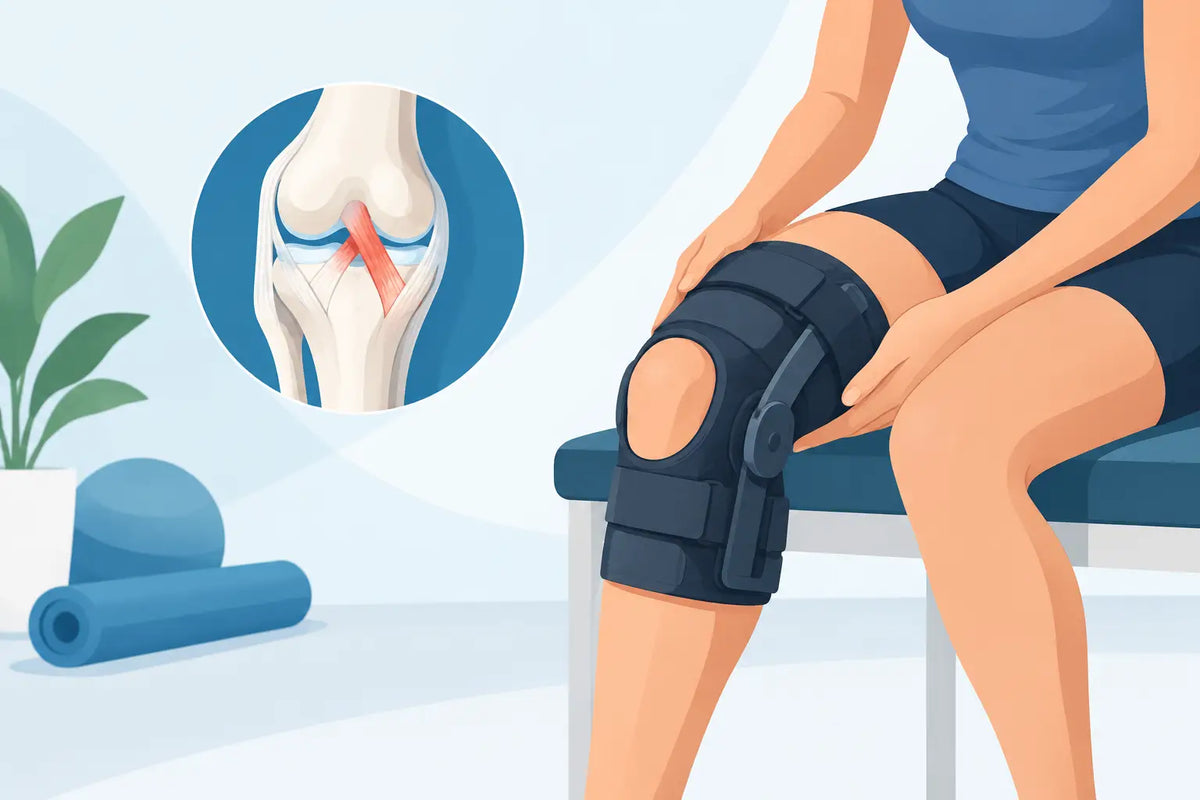
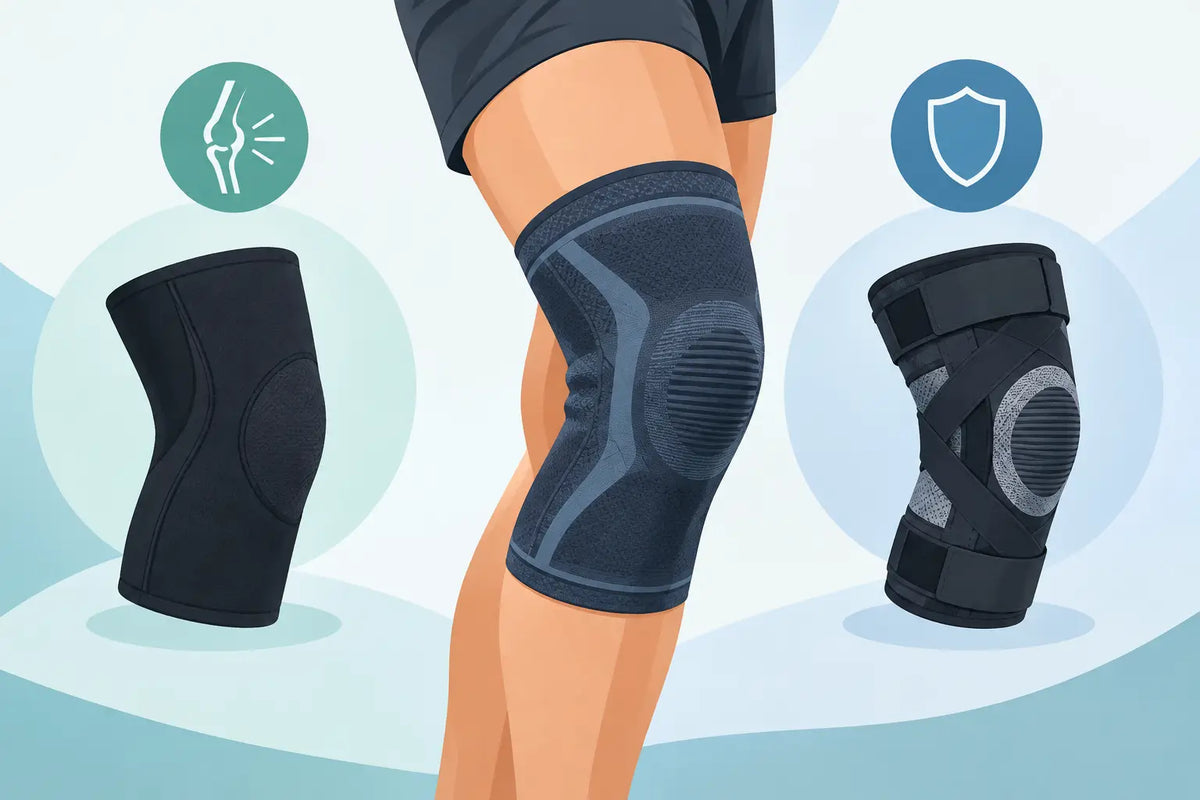
That said, buying without a prescription should not mean choosing without thought. A lightweight knitted knee support may be appropriate for mild swelling or everyday proprioceptive support, while a hinged knee brace may be more suitable when a clinician has identified ligament instability or a need for greater lateral control. The same principle applies across ankle, back, wrist, shoulder, thumb, and other support categories.
A prescription or clinical recommendation is especially valuable when symptoms are persistent, a joint is repeatedly giving way, there has been a significant injury, or you are recovering after surgery or a procedure. In these situations, the goal is not only to reduce discomfort. It is to select a support that fits within a broader treatment plan and does not interfere with rehabilitation goals.
When a Prescription May Be Needed for Insurance
Extended health plans, workplace benefits, and private insurance policies often have their own rules for orthopedic braces. Many plans require a prescription from a physician or another qualified prescriber before they will reimburse an eligible brace. Some also require the brace to be purchased from an approved supplier, while others set maximum coverage amounts or limit claims to a particular time period.
Requirements vary by insurer and plan. Even two people with the same insurer may have different coverage because of their employer plan, union agreement, or selected benefit level. Provincial public health coverage also does not automatically mean that an orthopedic brace will be covered.
Before ordering, review your plan details or contact your insurer with a few specific questions: whether the brace category is eligible, who may write the prescription, whether pre-authorization is required, and which documents must be submitted with the claim. Confirm whether the plan covers an off-the-shelf brace, a custom-fitted device, or only certain types of medical equipment.
For reimbursement purposes, insurers commonly ask for documentation that clearly identifies the patient, the clinical need, the prescribed device or support category, the date, and the prescriber's credentials. They may also request an itemized receipt showing the product name, price, and supplier information. Keep copies of all documents until the claim has been processed.
A Clinical Recommendation and a Prescription Are Not Always the Same
A physiotherapist, chiropractor, occupational therapist, athletic therapist, or orthopedic specialist may recommend a brace as part of care. Their expertise can be highly useful in matching support level and function to your condition. For example, a therapist may recommend a stabilizing ankle brace during a return-to-sport progression, or a wrist orthosis to reduce painful movement while hand function is being restored.
However, a clinical recommendation does not always meet an insurer's definition of a prescription. Some plans specifically require a physician's prescription, while others accept documentation from a broader group of regulated health professionals. Ask before you purchase rather than assuming that a treatment recommendation will be sufficient for a claim.
For practitioners, clear documentation helps patients understand both the treatment purpose and the reimbursement process. A prescription that describes the affected body region and the required support type can be more useful than a vague note requesting a "brace." It gives the patient, supplier, and insurer a clearer basis for selecting and processing the device.
Choosing the Right Level of Support
The most suitable brace depends on more than where it hurts. Consider the diagnosis or suspected issue, the stage of recovery, your daily activities, and whether the brace is intended for short-term protection, rehabilitation, or longer-term management.
Compression supports are often chosen for mild discomfort, swelling management, warmth, and proprioceptive feedback. They can be a practical option for people who want flexible support during work, walking, or exercise. Their trade-off is that they generally provide less mechanical control than a brace with straps, stays, rigid elements, or hinges.
Stabilizing braces offer a higher level of guidance for joints affected by instability, ligament strain, or movement-related pain. Features such as anatomical straps, lateral stays, adjustable closures, and silicone grip zones can help keep the device positioned during activity. More support may be beneficial, but it can also feel bulkier under clothing and may limit certain movements.
Immobilizing or strongly restrictive orthoses are typically used for more specific indications, including acute injury management, post-treatment protection, or defined periods of restricted movement. These products should generally be selected with professional guidance. Wearing a highly restrictive brace for too long, or using it when movement is needed for recovery, can work against rehabilitation.
Fit is equally important. A brace that slides, bunches behind the knee, causes numbness, or leaves deep pressure marks is not functioning as intended. Use the manufacturer sizing instructions and measure the indicated body area rather than selecting by clothing size alone. If swelling changes significantly through the day, an adjustable design may offer more practical control than a fixed pull-on support.
Situations That Call for Assessment First
A brace can be useful, but it cannot diagnose a fracture, repair a torn ligament, or replace a structured rehabilitation plan. Seek timely medical assessment after a significant fall or collision, visible deformity, severe swelling, inability to bear weight, sudden weakness, loss of sensation, or severe and worsening pain.
Assessment is also sensible when symptoms do not improve, pain regularly wakes you at night, a joint locks or catches, or you are unsure why swelling keeps returning. For people with diabetes, impaired circulation, reduced sensation, skin conditions, or a history of blood clots, brace selection should be discussed with a healthcare professional. Compression and contact pressure need to be appropriate for the individual.
If you have been given post-operative instructions, follow them closely. The timing of bracing, weight-bearing, and range-of-motion progression can be specific to the procedure and surgeon's protocol.
How to Prepare for a Reimbursement Claim
If coverage is a priority, arrange the prescription before purchasing whenever possible. Ask the prescriber to include enough detail for the insurer to understand the medical purpose, such as the body area, relevant condition, and required type of brace. Then verify that the product and supplier meet your plan's criteria.
Retain the prescription, itemized purchase receipt, product documentation, and any completed insurer forms. Do not discard packaging or paperwork immediately, particularly if you may need to exchange the brace for another size. A properly fitted product supports both comfort and treatment effectiveness.
Sporlastic Canada provides product documentation designed to help customers retain the information commonly requested for insurance reimbursement. Coverage decisions remain with the insurer, but having clear records can reduce avoidable delays.
The Right Question Is Often More Specific
Rather than asking only whether a prescription is required, ask what you need the brace to do. Do you need gentle compression for a demanding shift, controlled support during rehabilitation, or a clinician-directed orthosis after treatment? The answer helps determine the appropriate product category and whether professional assessment or prescription documentation should come first.
A well-chosen brace should support movement with purpose: enough stabilization for the task at hand, enough comfort for consistent wear, and a clear place in your overall recovery or mobility plan.

Leave a comment
This site is protected by hCaptcha and the hCaptcha Privacy Policy and Terms of Service apply.