

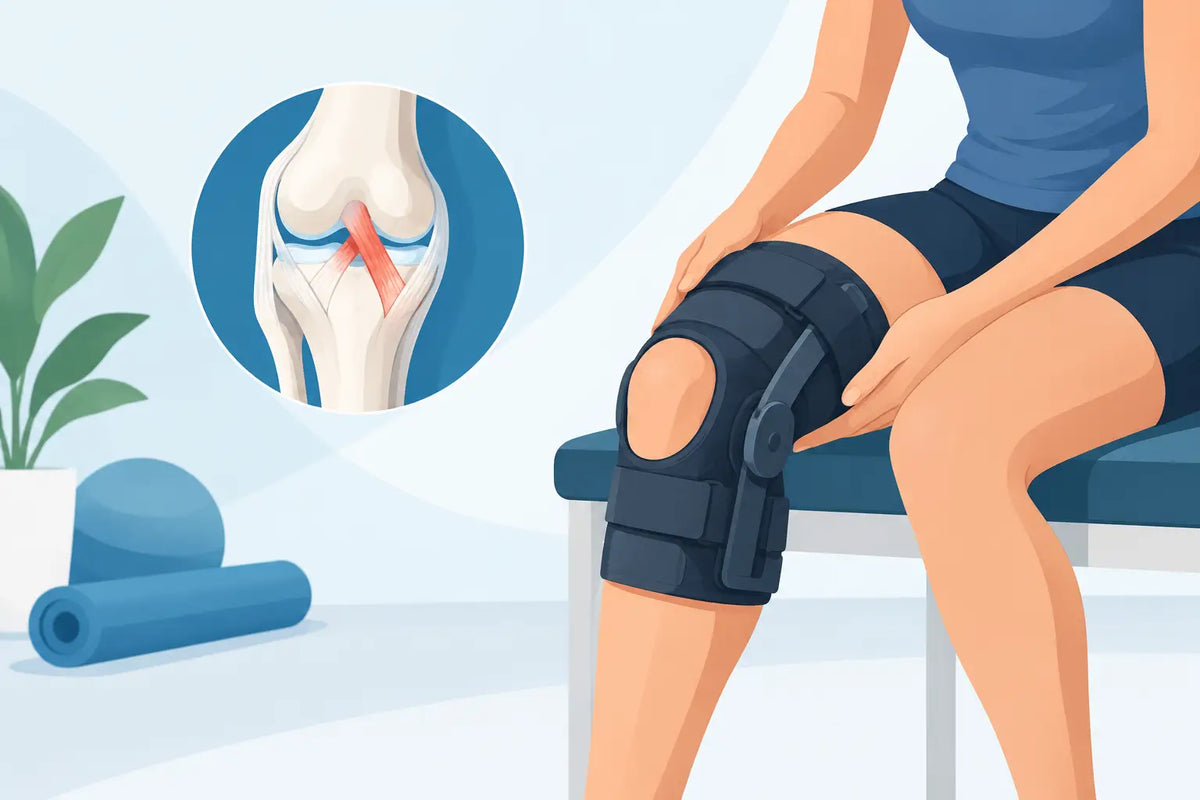
A ligament injury can make an otherwise ordinary movement feel uncertain: stepping off a curb after an ankle sprain, turning to reach behind you, or climbing stairs with a knee that no longer feels dependable. The best braces for ligament injuries are not simply the stiffest options available. They are the supports that match the injured joint, the direction of instability, your stage of recovery, and the activities you need to return to safely.
A brace cannot repair a torn ligament on its own, and it should not replace an assessment when pain, swelling, or instability is significant. It can, however, be a purposeful part of a treatment plan. Well-designed compression and stabilization can help manage swelling, improve joint awareness, limit painful end-range movement, and provide confidence while rehabilitation progresses.
What Makes a Brace Suitable for a Ligament Injury?
Ligaments connect bone to bone and guide joint movement. When they are stretched or torn, the joint may feel painful, swollen, loose, or unreliable. The right support is selected according to the structure involved, not just the area where discomfort is felt.
For a mild sprain, a compressive knit support may be appropriate when guided by a clinician. It provides proprioceptive feedback - the sensory information that helps you recognize joint position - while allowing relatively normal movement. For moderate instability or a return to higher-demand activity, a brace with straps, reinforced zones, hinges, or rigid stays may offer more directional control.
More support is not automatically better. A highly restrictive brace can be necessary after a significant injury or procedure, but it may be unsuitable for prolonged unsupervised use when controlled movement is part of rehabilitation. The goal is sufficient stabilization for the task at hand, with a fit comfortable enough that you will wear it correctly.
Match support level to recovery stage
In the early phase, swelling and pain often influence brace choice as much as instability does. Adjustable closures can accommodate day-to-day changes in circumference, while compression may help with edema management when medically appropriate. A brace should not cause tingling, numbness, cold toes or fingers, or deep pressure marks.
As symptoms settle, many people move toward a lower-profile support that fits under everyday clothing or footwear. During sport, uneven-ground walking, lifting, or physically demanding work, a more structured brace may still be useful. Your physician, physiotherapist, chiropractor, athletic therapist, or occupational therapist can help establish when to reduce support and when activity can increase.
Best Braces for Ligament Injuries by Joint
The category matters because each joint moves differently and experiences different forces. Choosing a generic support based only on size can leave the injured ligament insufficiently controlled.
Ankle ligament injuries
Ankle sprains commonly affect the ligaments on the outside of the ankle, often after the foot rolls inward. For mild residual soreness or minor instability, an anatomical compression ankle support can provide warmth, proprioceptive input, and comfortable support inside a roomy shoe.
When the ankle repeatedly gives way, look for a stabilizing ankle orthosis with figure-eight strapping, lateral reinforcements, or a semi-rigid shell. These designs are intended to reduce excessive inversion and eversion while preserving the up-and-down motion needed for walking. Footwear is part of the fit: a brace that works well at home but cannot be worn with your work boot or athletic shoe is unlikely to support consistent recovery.
Knee ligament injuries
Knee ligament injuries range from a low-grade medial collateral ligament sprain to complex injuries involving the ACL, PCL, meniscus, or multiple structures. A simple elastic knee sleeve may feel reassuring, but it does not provide the same control as a brace with side stays or polycentric hinges.
For medial or lateral ligament discomfort, a knee support with structured side stabilization can help guide movement and limit unwanted side-to-side stress. For diagnosed cruciate ligament injury, post-operative recovery, or pronounced instability, a clinician may recommend a functional hinged knee brace. Hinge alignment is critical. If the hinge sits too high, too low, or rotates away from the knee joint line, the brace may migrate and fail to provide its intended support.
Do not use a knee brace to push through locking, a sudden inability to bear weight, major swelling, or repeated buckling. Those symptoms warrant clinical assessment rather than a self-directed product change.
Wrist, thumb, and finger ligament injuries
Falls, contact sport, and workplace strain can injure small but important ligaments in the wrist and hand. Here, immobilization requirements can be highly specific. A wrist support that leaves the thumb free may be appropriate for one condition but inadequate for a suspected thumb ulnar collateral ligament injury, where a thumb-spica design may be required.
Choose a support that stabilizes the injured segment without unnecessarily restricting unaffected fingers. Adjustable palm stays and mouldable elements can be useful when a clinician has advised a particular wrist position. Because hand function is essential for driving, work, and self-care, confirm that the brace allows safe use for your prescribed activity level.
Shoulder and elbow ligament injuries
Shoulder instability and elbow ligament injuries need more careful diagnosis than many customers expect. A shoulder support may provide compression, warmth, and proprioceptive reassurance, but it cannot reliably control a dislocation-prone shoulder in the same way as a prescribed immobilizer or rehabilitation plan. For the elbow, a brace with straps or articulated support may be considered when ligament instability has been identified.
If an injury followed a fall, collision, dislocation, or a sudden pop with deformity, seek timely medical care before selecting a support. The correct brace depends on the affected structure and on whether movement should be protected or progressively restored.
Features That Affect Comfort and Control
Premium orthopedic braces are treatment tools, so construction details matter. Medical-grade compression should be graduated or anatomically distributed where appropriate, avoiding painful bunching behind the knee, at the ankle crease, or in the palm. Breathable knit materials can improve day-long comfort, particularly for people who work on their feet or wear a support during rehabilitation exercises.
Stays, straps, and hinges are equally purposeful. Stays provide localized guidance; straps can reinforce a specific movement pattern; hinges offer more defined control through a joint’s range of motion. Silicone grip zones may reduce migration, but a brace that continually slips often indicates incorrect sizing, an unsuitable shape, or a support level that does not match the activity.
German-engineered orthopedic designs, including those available through Sporlastic Canada, are developed with these practical considerations in mind: anatomical fit, clinically informed stabilization, and materials designed for repeated daily wear. The best design is still the one that corresponds to your diagnosis and care plan.
Getting the Fit Right
Measure exactly as directed for the product. For many knee and ankle supports, circumference measurements are taken at defined points around the joint, not where the limb appears widest. Measure on bare skin, preferably at a consistent time of day if swelling fluctuates.
Put the brace on with the joint in the recommended position. Smooth out wrinkles, align stays or hinges with the joint, then secure straps without overtightening. Walk, sit, and perform a few controlled movements. The brace should feel secure, not restrictive enough to alter circulation or create sharp pressure.
If you are between sizes, do not assume smaller is more supportive. Compression and stabilization depend on correct anatomical placement. Product-specific sizing guidance and advice from a healthcare professional are particularly valuable after surgery, with significant swelling, or when you have diabetes, reduced sensation, vascular concerns, or skin fragility.
When a Brace Is Not Enough
A brace is appropriate only after urgent concerns have been considered. Seek prompt medical assessment for severe deformity, inability to bear weight after an injury, uncontrolled pain, numbness, a pale or cold limb, rapidly increasing swelling, or signs of infection after surgery. A popping sensation followed by immediate swelling or joint instability also deserves professional evaluation.
For confirmed ligament injuries, bracing works best alongside the plan that addresses strength, balance, mobility, and movement control. Returning to activity based solely on reduced pain can be misleading; a joint may feel better before it has regained the capacity to tolerate pivoting, landing, carrying, or repetitive work.
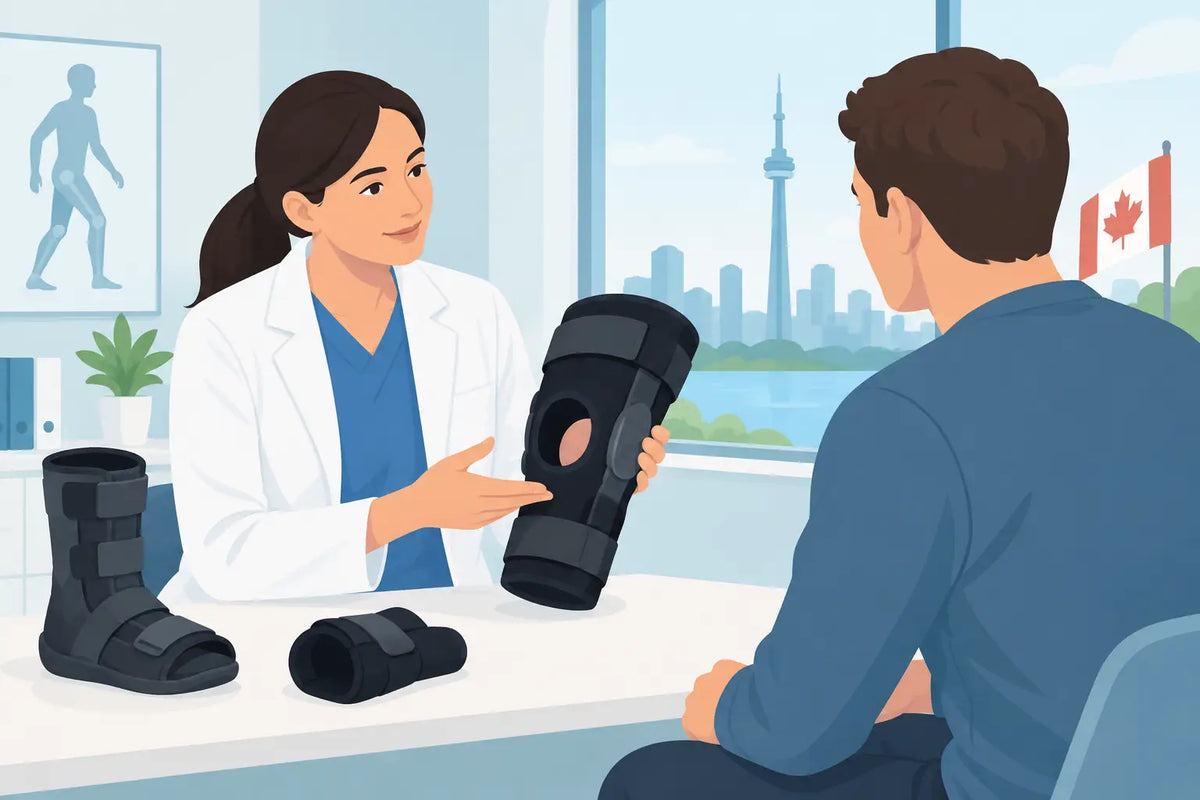
If you are purchasing a brace under a practitioner’s recommendation, retain your prescription and receipt for potential insurance reimbursement. Coverage varies by plan, so the required documentation should be confirmed with your insurer before purchase.
A well-fitted brace should make the next safe step feel more manageable, not encourage a rushed return to the movements that caused the injury. Choose the support that protects the joint you have, while giving your rehabilitation the room to do its work.

Leave a comment
This site is protected by hCaptcha and the hCaptcha Privacy Policy and Terms of Service apply.