
Pain that catches when you turn in bed, step out of a car, climb stairs, or stand on one leg can make ordinary movement feel uncertain. An SI joint belt is designed to provide targeted compression around the pelvis, helping some people feel more supported during daily activity, rehabilitation, work, or exercise.
The key word is targeted. A pelvic support belt is not simply a smaller back brace, and tighter is not automatically better. Its purpose is to support the sacroiliac region with controlled compression while allowing you to move. The right belt, position, and treatment plan depend on the source of your symptoms.
What an SI joint belt is designed to do
The sacroiliac, or SI, joints sit at the back of the pelvis, where the sacrum meets the iliac bones. These joints transfer load between the spine and legs. They move only a small amount, but they are involved whenever you walk, bend, roll in bed, lift, or change position.
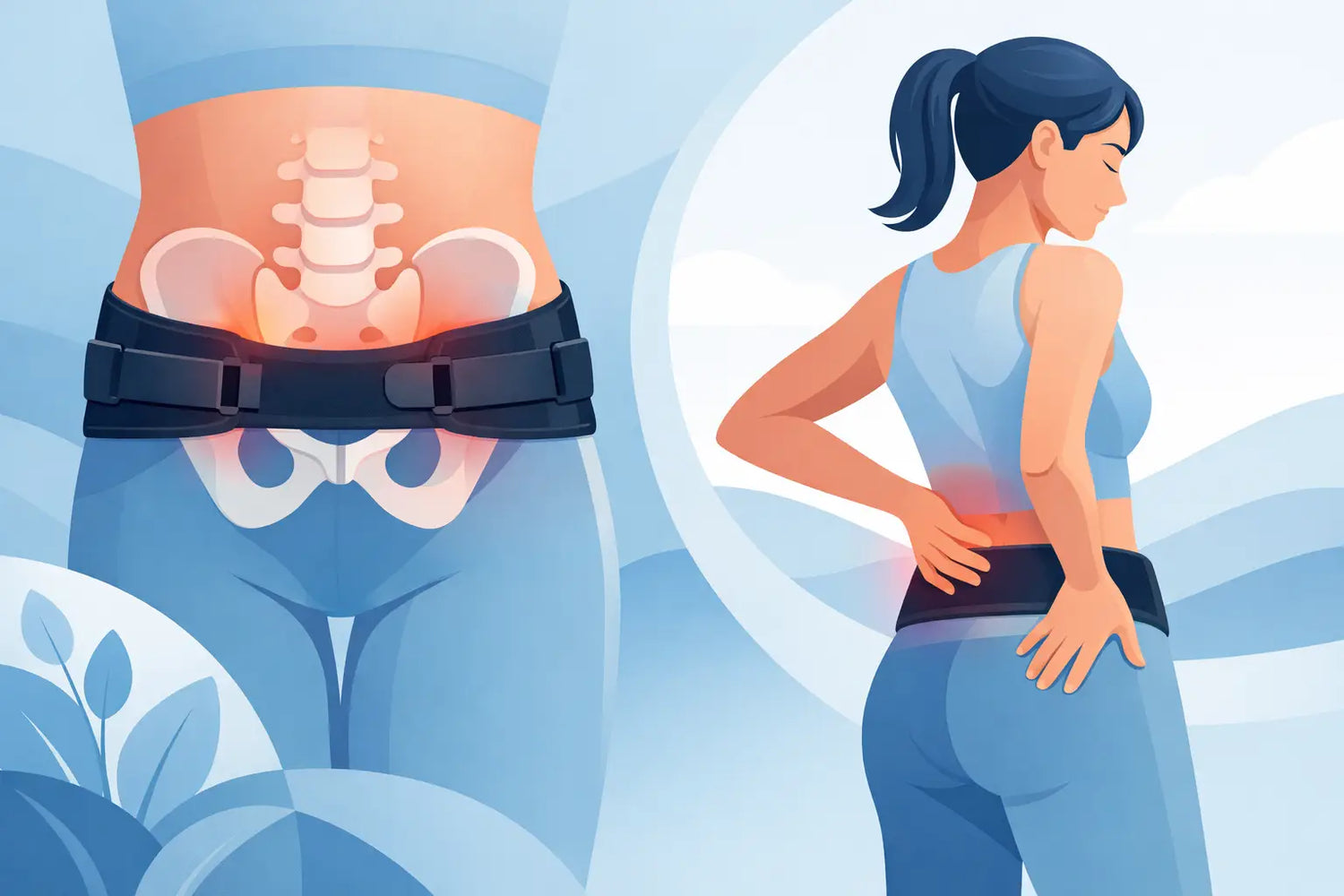
An SI joint belt wraps low around the pelvis, typically across the upper buttocks and below the prominent points of the hip bones. By applying circumferential compression in this area, it may help improve the feeling of pelvic stability and reduce painful movement for certain people. Many belts use adjustable fastening systems so the level of compression can be changed through the day.
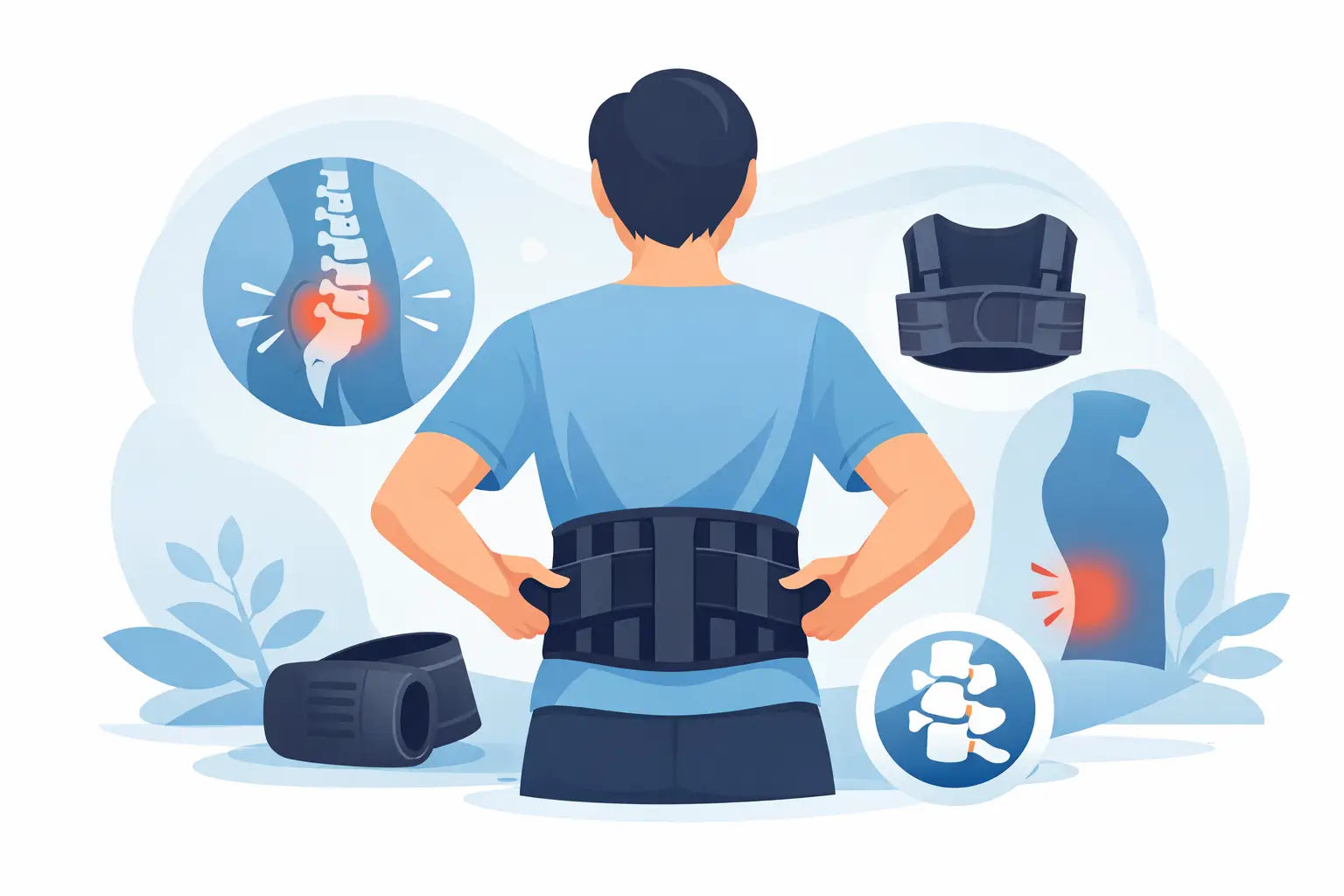
This is different from a lumbar support, which is generally positioned higher and is intended to influence the lower back. If pain is concentrated in the pelvic area, a lumbar brace worn at the waist may not provide support where it is needed. Conversely, a pelvic belt will not address every type of low-back pain.
When pelvic compression may be appropriate
SI-region discomfort can have several causes. Symptoms may be associated with pelvic girdle pain during or after pregnancy, altered load transfer after an injury, joint irritation, degenerative changes, differences in movement control, or demands from work and sport. Pain is often felt on one or both sides near the dimples at the back of the pelvis, but it can also be felt in the buttock, groin, hip, or upper thigh.
A belt may be considered when symptoms are provoked by activities that load one side of the pelvis, such as walking, stairs, turning, getting dressed while standing, or transferring in and out of a vehicle. It can also be useful as a short-term support during a physiotherapy-led program, particularly when a person is rebuilding tolerance for movement after a flare-up.
Response is individual. Some people notice a meaningful reduction in discomfort during walking or standing; others notice little change because their symptoms arise from the lumbar spine, hip, nerve irritation, or another condition. An assessment from a physician, physiotherapist, chiropractor, or other qualified practitioner can help distinguish the likely pain source and determine whether pelvic compression is appropriate.
Pregnancy and postpartum pelvic girdle pain
Pregnancy-related pelvic girdle pain is a common reason people consider an SI belt. Hormonal changes, altered posture, and increasing load can make transitions and single-leg activities uncomfortable. A properly fitted belt may offer practical support for errands, caregiving, or short periods of standing.
It should not be viewed as a reason to push through escalating pain or fatigue. In many cases, the most useful approach combines a belt with pacing strategies, modified movement, and guided exercises. Postpartum needs also vary: some people benefit from temporary support while returning to walking and daily routines, while others need a more individualized rehabilitation plan.
How to fit an SI joint belt correctly
Position is often the difference between a belt that helps and one that feels ineffective. Start with the belt low on the pelvis, rather than around the natural waist. It should sit over the firm bony area of the pelvis, generally below the iliac crests and across the upper buttock region.
Secure the belt while standing in a comfortable, neutral posture. It should feel snug and supportive without restricting breathing, pinching the skin, causing numbness, or creating increased pain. A useful test is to walk for a few minutes, take a few steps on stairs if safe, and perform a gentle sit-to-stand. If your symptoms feel calmer or movement feels more controlled, the position and tension may be appropriate.
If the belt rides upward toward the waist, it is likely too high, too loose, or not suited to your body shape. If it slips, folds, or causes pressure points, adjust the tension and clothing layer beneath it. Thin, smooth clothing can improve comfort and reduce irritation, especially during longer wear.
Do not assume maximum tension provides maximum support. Excessive compression can be uncomfortable and may make sitting, digestion, or normal movement more difficult. The goal is a stable, tolerable fit that supports function.
Choosing the right level of support
An effective pelvic support should match both your symptoms and the realities of your day. A narrow, low-profile belt may suit occasional use under clothing or during specific activities. A wider design may provide a more substantial sense of coverage for some body types, but it can be more noticeable when seated or layered under fitted garments.
Adjustability matters because symptoms and activity demands can change. You may prefer lighter compression while sitting at work and firmer support for a walk, household tasks, or rehabilitation exercises. Materials also affect adherence. Breathable, skin-friendly textiles and low-profile closures can make a meaningful difference when a belt is worn regularly.
Sizing should follow the manufacturer’s measurement instructions rather than relying on pant size. Measure at the stated pelvic location, not necessarily at the waist. A belt that is too large may migrate and fail to provide consistent compression; one that is too small can create uncomfortable pressure and limit adjustment range.
For patients and clinicians selecting an orthopedic support, consider the diagnosis or clinical impression, the intended duration of wear, mobility requirements, skin sensitivity, and whether the belt must fit discreetly beneath work clothing. A clinically designed support with durable closures and clear fitting guidance is generally a better choice than a generic elastic strap with limited adjustability.
Wear it as a tool, not a permanent substitute for movement
An SI belt is usually most helpful when used strategically. Some people wear it for a morning walk, a work shift involving standing or lifting, a shopping trip, or exercise prescribed by their therapist. Others use it during a short flare-up and reduce wear as symptoms settle and strength improves.
Wearing any support continuously without reassessment can have drawbacks. It may become uncomfortable, affect confidence in unsupported movement, or mask a change in symptoms that needs clinical attention. The appropriate schedule depends on your condition, symptom pattern, and professional guidance.
A belt often works best alongside treatment aimed at improving how the pelvis, hips, trunk, and legs manage load. Depending on the assessment, this may include graded walking, hip and trunk strengthening, mobility work, lifting modifications, or temporary changes to activity volume. The belt can make those activities more tolerable, but it does not replace the underlying rehabilitation plan.
When a belt is not enough
Seek timely medical assessment if pelvic or back pain begins after a significant fall or accident, is severe and worsening, or is accompanied by fever, unexplained weight loss, new bowel or bladder changes, saddle-area numbness, or progressive weakness in the leg. These symptoms require more than self-management with a support belt.
Persistent pain that disrupts sleep, continues despite activity modification, or radiates below the knee also deserves assessment. The SI region can refer pain, but similar symptoms can arise from the hip, lumbar spine, nerves, and other structures. A clear diagnosis helps prevent prolonged trial and error.
People with circulatory concerns, significant skin conditions, recent surgery, or a history of conditions affecting sensation should ask a health professional before using compression-based supports. Stop using the belt and seek advice if it causes skin irritation, numbness, tingling, or increased pain.
Practical purchase and care considerations
If your extended health plan covers orthopedic braces, reimbursement may require a physician prescription and an itemized receipt. Confirm your insurer’s requirements before purchasing, particularly if the belt is being recommended as part of a treatment plan. Keep all product and purchase documentation for your records.
For regular use, follow the care instructions supplied with the support. Closing fasteners before washing and allowing the belt to air dry can help protect the elastic materials and fastening system. Check the belt periodically for worn closures or loss of elasticity, since consistent compression is central to its function.
Sporlastic Canada approaches orthopedic supports as purposeful treatment tools: the best result comes from choosing a design that fits correctly, supports the indicated area, and aligns with guidance from your care team. A well-positioned SI belt should make the next necessary movement feel more manageable, whether that is walking to the mailbox, completing a shift, or progressing through rehabilitation.

Leave a comment
This site is protected by hCaptcha and the hCaptcha Privacy Policy and Terms of Service apply.