

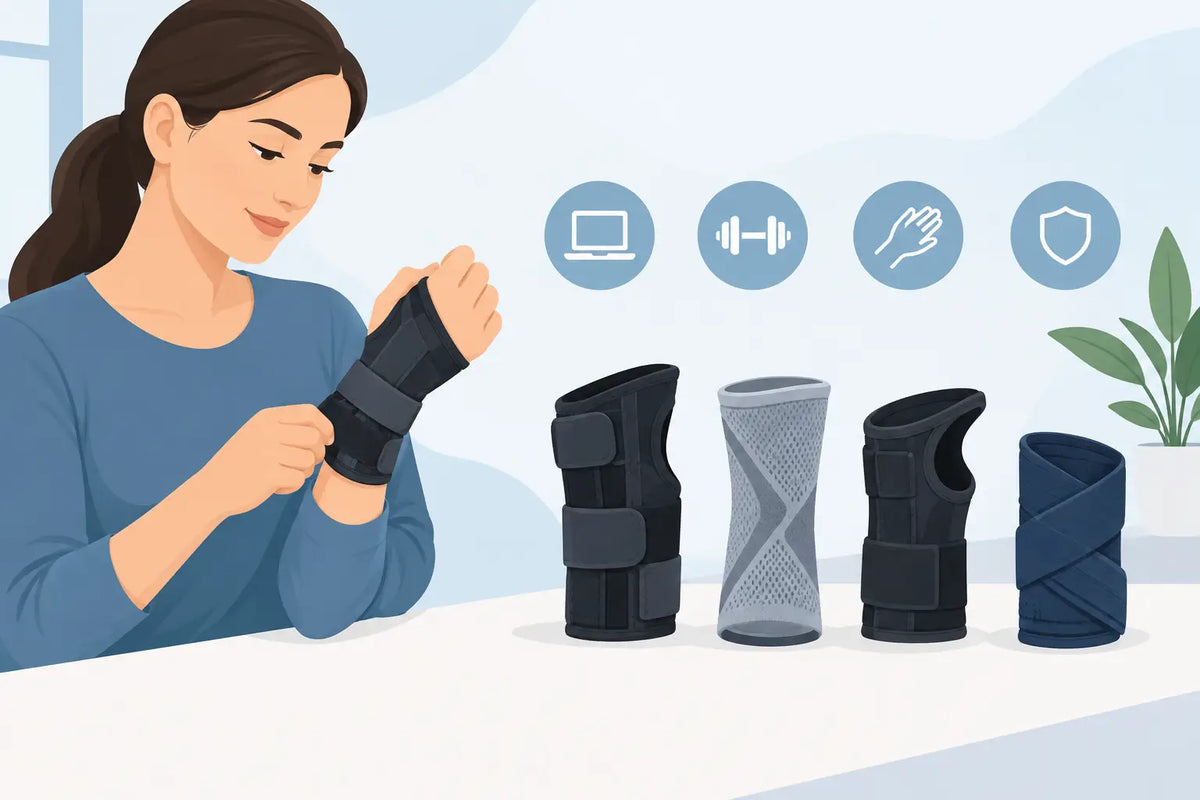
A wrist that aches when you lift a kettle, type through a workday, or push up from a chair is rarely helped by simply “being careful.” The right wrist splints can limit painful movement, support vulnerable tissues and make day-to-day activity more manageable while recovery or treatment progresses. The key is choosing support that matches the condition, the stage of healing and the demands placed on your hand.
A splint is not a substitute for an assessment when pain is severe, follows a fall, or affects sensation or strength. Used appropriately, however, it can be a purposeful part of a broader plan developed with a physician, physiotherapist, occupational therapist, chiropractor or other qualified health professional.
What wrist splints are designed to do
The wrist is a compact joint with many small bones, ligaments, tendons and nerves passing through a narrow space. Repetitive gripping, loading, twisting and bending can irritate these structures. An injury can also leave the joint feeling weak or unstable long after swelling has settled.
Wrist splints hold the wrist in a more neutral, protected position. Depending on their design, they may reduce extension and flexion, limit side-to-side movement, provide compression around soft tissue, or add a stabilizing stay along the palm side of the wrist. This can reduce strain during activities that would otherwise provoke symptoms.
The aim is not necessarily to make the wrist completely immobile. For many conditions, controlled movement remains valuable. The appropriate level of restriction depends on whether the priority is protecting an acute injury, reducing repetitive irritation, supporting a return to activity or managing longer-term symptoms.
Match the support to the problem
A wrist support should be selected for the area and type of symptoms, not just because it is labelled as a general wrist brace. A soft compression support may suit mild soreness, swelling or fatigue where a full splint would be unnecessarily restrictive. A more structured brace with an integrated palmar stay may be more suitable when bending the wrist is painful or when the joint needs more reliable stabilization.
For suspected carpal tunnel syndrome, a night splint that keeps the wrist close to neutral may help reduce symptoms that are aggravated by sleeping with the wrist bent. Tingling, numbness or pain into the thumb, index and middle fingers should still be assessed, particularly if symptoms are frequent, worsening or accompanied by weakness.
After a sprain, tendon irritation or non-surgical fracture treatment, the recommended support and wearing schedule should come from the treating clinician. A splint that feels secure can be helpful, but it can also conceal a problem if it allows someone to return to forceful work or sport too soon.
Thumb-related pain is another common point of confusion. A standard wrist splint may not sufficiently control the thumb base. When pain is located around the thumb, especially during pinching or opening jars, a thumb-spica style support that stabilizes both the wrist and thumb may be the more relevant category.
When greater stabilization may be appropriate
More structured supports are often considered where there is clear movement-related pain, a sense of instability, or a need to protect the wrist during a defined stage of rehabilitation. Features such as shaped stays, adjustable straps and anatomically contoured construction help keep the brace from shifting during use.
This added control has a trade-off. A more rigid splint can interfere with keyboard work, hand hygiene, fine motor tasks and grip. It may be best reserved for symptom-provoking tasks, a prescribed recovery period or nighttime use rather than worn continuously without guidance.
Fit matters as much as support level
A poorly fitted splint can create pressure over the wrist crease, slide toward the hand, restrict circulation or fail to stabilize the joint at all. Measure according to the product’s sizing instructions, usually around the wrist at the specified location. Do not assume that a glove size will provide an accurate brace size.
When fitted correctly, the wrist should sit comfortably in the intended position, with the stabilizing component aligned along the palm side when included. Straps should feel secure without digging in. You should be able to move your fingers freely and maintain normal colour and warmth in the hand.
Take the splint off and reassess the fit if you notice increasing numbness, tingling, throbbing, cold fingers, skin irritation or pronounced swelling beyond the edge of the brace. These symptoms may indicate excessive pressure, an unsuitable size or a condition that needs clinical review.
Quality construction also has practical value. Breathable, skin-friendly materials can make regular wear more tolerable, while durable closures and thoughtful shaping help maintain consistent support. For people who use a brace at work, during rehabilitation exercises or throughout the night, comfort is not a minor detail. It affects whether the support is worn as intended.
How and when to wear a wrist splint
The correct schedule depends on the diagnosis. Some people benefit most from wearing a splint during activities that trigger symptoms, such as prolonged typing, driving, lifting or repetitive tool use. Others may be advised to wear it overnight to reduce sustained wrist flexion. Following an injury or procedure, wear time may be more structured and should follow the treating provider’s instructions.
Avoid assuming that more wear always produces a better outcome. Long periods of unnecessary immobilization can contribute to stiffness, reduced strength and loss of confidence in movement. A clinician may recommend gradual reduction in brace use as symptoms settle and function improves.
A useful approach is to observe what changes with the splint on and off. Does it reduce pain during a specific task? Does it prevent waking at night with numbness? Does it leave the wrist stiff after several hours? These details help refine the wearing plan and give a health practitioner better information at follow-up.
Use a splint alongside active recovery
A support works best when it has a defined role. In early recovery, that role may be protection. Later, it may be confidence during a gradual return to work, exercise or sport. It should not become the only strategy for persistent wrist pain.
Treatment may also involve adjusting workstation set-up, reducing repetitive load, learning alternative lifting techniques, completing prescribed mobility or strengthening exercises, and addressing contributing conditions in the elbow, shoulder or neck. For athletes, a return-to-training plan should consider the force transmitted through the wrist in activities such as weight training, racquet sports, cycling and contact sport.
If your work requires repetitive gripping, vibration exposure or heavy handling, ask a practitioner how the splint fits into modified duties. A brace may improve comfort, but it cannot remove all load from an injured structure. Pacing, task rotation and ergonomic changes can be just as relevant.
Know when a wrist needs prompt assessment
Seek medical attention promptly after a fall or direct impact if there is significant swelling, deformity, severe pain, inability to use the hand, or tenderness over the thumb-side of the wrist. Some fractures can be difficult to identify without assessment and imaging.
Arrange clinical review for persistent numbness, progressive weakness, pain that interrupts sleep despite support, redness and heat around the joint, or symptoms that do not improve with a sensible period of activity modification. A splint can support a treatment plan, but it should not delay diagnosis when symptoms point to a nerve issue, fracture, inflammatory condition or more significant tendon or ligament injury.
Practical considerations for Canadian customers
If you are purchasing a brace following a professional recommendation, retain the receipt, product information and any prescription or written recommendation provided by your clinician. Extended health plans vary widely, and many require documentation to consider reimbursement. Confirm your plan’s requirements before purchasing if insurance coverage is a deciding factor.
For clinics and practitioners, selecting a clinically appropriate support also means considering patient adherence. A product that is difficult to apply, too bulky for work or uncomfortable against the skin is less likely to be used consistently. Sporlastic Canada focuses on orthopedic supports designed with stabilization, fit and everyday wear in mind, helping patients and professionals align the brace choice with a functional treatment goal.
The best wrist splint is the one that provides enough support for the task at hand without creating unnecessary restriction. Start with the symptoms and the activity that aggravates them, confirm sizing carefully, and let comfort, function and professional guidance shape the next step.


Leave a comment
This site is protected by hCaptcha and the hCaptcha Privacy Policy and Terms of Service apply.